Local Leader Spotlight: Cultivating Resilience With Ann DuPre Rogers, LCSW

Local Leader Spotlight: Cultivating Resilience With Ann DuPre Rogers, LCSW

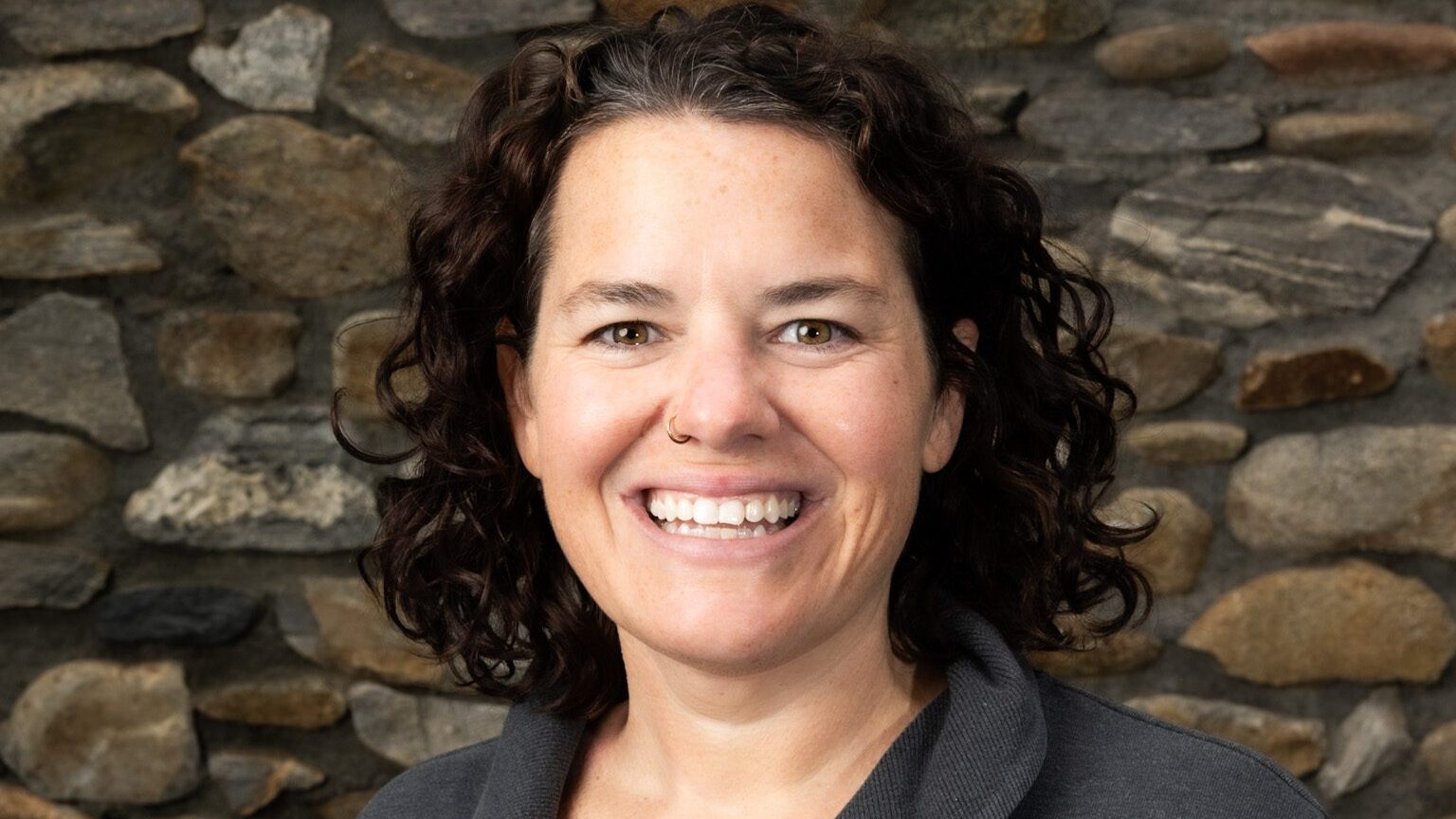
Western North Carolina is home to countless leaders who strengthen the wellbeing of our communities, especially in the wake of Hurricane Helene. Among them is Licensed Clinical Social Worker Ann DuPre Rogers, whose career sits at the intersection of mental health advocacy, community education, and trauma‑informed care.

As the Executive Director of Resources For Resilience, Rogers is not your typical nonprofit leader. Her staff describe her as supportive, loving, and grounded — and also someone who doesn’t take herself too seriously, as evidenced by the growing collection of photos of her in playful costumes.

“Ann DuPre is so fun and easy to be around that it’s easy to forget what a big deal she is! She’s unfailingly kind and generous but has the steely determination required to actually get things done. This organization reflects her beautiful values and commitment,” one team member shares.

A Lifelong Commitment to Community Wellbeing

For nearly three decades, Rogers has served Western North Carolina in roles spanning school social work, child and family therapy, clinical supervision, program administration, provider relations, and community outreach. Each chapter deepened her understanding of the challenges families face and the systems meant to support them.

Her path began long before she stepped into leadership. After earning a bachelor’s degree in psychology from Davidson College and a master’s in social work from the University of Georgia, she spent years in community mental health beginning in the mid‑1990s. Those early experiences, she says, revealed how profoundly people can grow when they feel safe, supported, and connected.

Rogers’ impact extends far beyond administrative leadership. As a former yoga instructor, outdoor education facilitator, and Mental Health First Aid trainer, she brings a unique mind–body lens to her work. For years, she has taught the science of stress, trauma, and resilience to audiences across WNC — helping providers, educators, first responders, and community leaders navigate stress and restore balance.

Her approach ensures that more people across the region can access high‑quality behavioral health support grounded in both research and compassion.

A Collective of Women Leading Change in WNC

In 2017, Rogers joined a collective of women working in public health:

  • Mary Lynn Barrett, LCSW
  • Susanne Walker Wilson, LCSW
  • Stephanie Citron, PhD
  • Ginger Clough, MPH
  • Katie Roberts, LCSW
  • Rev. Beth Turner, CPE

Inspired by leaders such as Elaine Miller‑Karas, Deb Dana, Babette Rothschild, Brené Brown, Judith Herman, and Pat Ogden, they united around a shared mission: help people not just survive adversity, but thrive through it.

They understood the research on adverse childhood experiences and somatic experiencing — how trauma lives in the body — and saw the need for accessible tools that could support healing across generations.

The Evolution of RFR, from Global Humanitarian Work to Local Resilience Building

The group initially focused on global humanitarian efforts, supporting communities affected by natural disasters, genocide, and crisis. But they soon recognized that these same tools were urgently needed at home, especially among people facing intergenerational trauma and systemic oppression.

Inspired by the Trauma Resource Institute’s Community Resiliency Model (CRM), they began developing their own core curriculum. Over time, their single community presentation, ‘Reconnect for Resilience’™, evolved into a registered 501(c)(3) nonprofit offering practical, research‑based tools across North Carolina.

In the early days, Resources For Resilience operated with only a few part‑time staff and a dedicated board working to meet the growing demand for public health education.

Today, the organization’s all‑female team has tripled in size and is led by one of its original founders — the remarkable Ann DuPre Rogers. RFR now offers more than ten different trainings, workshops, and sessions, each tailored to specific audiences and needs.

The organization delivers hundreds of events each year, prioritizing underserved communities, first responders, and groups most impacted by stress and trauma. RFR’s tools are used in schools, government agencies, healthcare settings, and even internationally.

Supporting WNC Through Hurricane Helene

In 2024 and 2025, RFR played a pivotal role in the region’s recovery from Hurricane Helene, providing hundreds of hours of acute crisis response and trauma‑informed programming for communities impacted by extreme weather.

Rogers notes that the effects of Helene are still deeply felt:

“For many in Western North Carolina, new storms and emergency weather alerts still stir anxiety or fear, even 18 months later. That’s because our nervous system remembers.”

She emphasizes that recovery has no universal timeline. “Every individual and family has unique circumstances that determine how long it takes them to feel settled again. Simple practices like grounding, gentle movement, recalling moments of safety, connecting with others, and reaching out for support can help the body and brain find balance again.”

In June 2026, Resources for Resilience wrapped up a major multi-million dollar project partnership with The NC Department of Health & Human Services, Vaya Health, and the Governor’s Recovery Office of Western North Carolina. This powerful regional collaboration has allowed RFR to serve thousands of WNC residents with free, trauma‑informed programming to help build inner steadiness while strengthening community connection.

Building a More Resilient Western North Carolina

What keeps Rogers inspired is simple: witnessing transformation. She describes nervous system regulation skills as “immediately, powerfully, and universally helpful,” and she uses them herself every day. Whether guiding a roomful of professionals or supporting an individual, she sees firsthand how useful the tools can be.

In a region facing both longstanding and emerging challenges — from rural healthcare access to the lingering impacts of Helene — Rogers’ work offers something essential: practical tools, shared with compassion, that help people feel more capable, more connected, and more whole.

“#WNCStrong is not just a catchy phrase,” she says. “It really is the foundation of who we are.”

Feet Firmly Planted: A Conversation with Ashley Putnam 

Feet Firmly Planted: A Conversation with Ashley Putnam 

Conversations in Resilience is a storytelling series from Resources for Resilience, created to elevate the voices of the people doing this work every day.

I’m Ashley Putnam and as the Director of Partnerships and Programs at Resources for Resilience, I focus on building relationships and making sure the people we work with have a meaningful experience in our trainings.   

I live in Weaverville, North Carolina, in Buncombe County. I grew up here. My dad graduated from North Buncombe. I graduated from North Buncombe. My oldest son graduated from North Buncombe. 

Western North Carolina isn’t one thing. Buncombe County stretches from Asheville into smaller, more rural communities. There’s agriculture. There’s farming. There are mountains and hollers and rivers. Many of us are natives. We’re tied to this place in a way that runs deep. 

We take care of our people. And by that, I mean the people of these mountains. It’s how we live. In community.  

Rethinking Resilience 

Being from here shapes how I understand resilience. 

It’s about staying close to people. Listening. Paying attention to what’s happening in a room. Noticing what’s happening in a body. That’s what this work teaches. 

Resources for Resilience helps people understand their nervous systems — how stress shows up physically, emotionally, relationally — and what simple tools can help them regulate. That it’s practical and usable right now. 

Sometimes that’s in a training room. Sometimes it’s in a school or a fire department. Sometimes it’s just a conversation where someone realizes, “Oh! That’s why I reacted the way I did!” 

When people understand their nervous system, they gain choice. They can respond instead versus react. They can stay connected instead of shutting down. That’s everyday resilience. 

There’s a moment I think about often. 

Immediately following Hurricane Helene, I was standing next to a woman at a donation center, helping where I could. It felt really good to stand there with my feet on the ground. 

I couldn’t fix the reality of what was happening. I didn’t have equipment. I wasn’t clearing debris. But I could stay present. I could stand with people in line with people and ground and talk. 

It was loud and emotional. And a woman next to me was overwhelmed and crying. So I asked her what was helping her through right then. We talked about small highlights in the day. I could see her breathing shift. Her shoulders soften. Nothing dramatic happened. The situation didn’t disappear. But her nervous system settled enough for her to move into the next moment. 

That’s the work. 

I remember one woman who was panicking because she couldn’t reach someone she needed to reach. When I asked what was helping her through, she said her faith. She said she kept humming Amazing Grace. So I asked if I could sing it with her. We stood outside that donation center and sang. We used Rapid Resets. We tapped. You could see some real de-escalation. That is nervous system awareness in practice.  

It doesn’t fix the storm. It helps someone settle enough to stay present inside it. 

Rooted, Yet Expansive 

Being from here shapes how I show up in this work. For a long time, I felt that subtle pressure to soften parts of who I am — my accent, my stories, the way this region is sometimes misunderstood. After Helene, I felt something different. Pride. Clarity. 

It made me even more committed to bringing this work into areas we haven’t reached before. In classrooms. In community spaces. In disaster response. In everyday conversations. Resilience isn’t just for the moment things fall apart. It’s for how we live together every day. 

If I could wish anything, it would be that anyone with a nervous system would step into one of our offerings and experience it for themselves. When people understand how our bodies respond to stress, it changes how they show up for themselves and for others. 

And here in western North Carolina, we know something simple and steady: 

We have each other. 


Editorial Stewardship
Sarah Staley is a senior communications leader who partners with mission-driven organizations to turn complexity into clarity and amplify the voices at the heart of the work. 

Finding Resilience Through Connection: A Conversation with Katherine Gutschenritter 

Finding Resilience Through Connection: A Conversation with Katherine Gutschenritter 

Conversations in Resilience is a storytelling series from Resources for Resilience, created to elevate the voices of the people doing this work every day. 

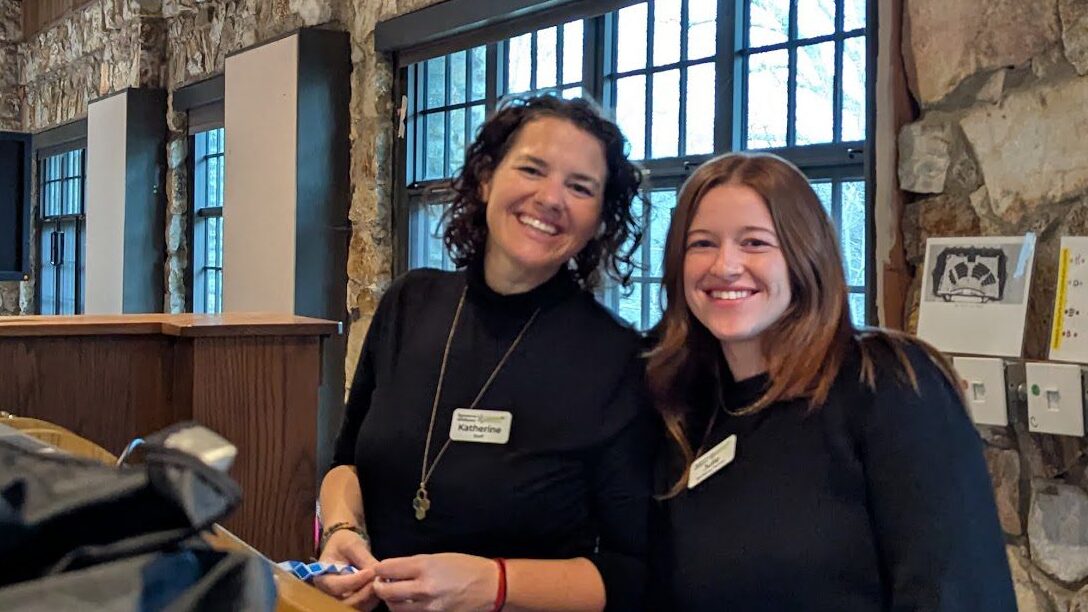
I’m a Program Coordinator at Resources for Resilience. My role is largely behind the scenes, supporting training logistics, coordination, and the systems that help our work reach communities across North Carolina. I’m also a trainer, which allows me to stay connected to the heart of the work. I love being able to support both the people delivering this work and the communities receiving it. It feels meaningful, practical, and deeply human.

Though I live in Asheville now, I’m originally from Atlanta and have lived many places across the U.S. and the world. Moving has always been a part of my story. But when I arrived in Asheville a handful of years ago, something shifted. It truly felt like home.

There is something about this community that brings a deep sense of belonging, of being seen and heard. That feeling is closely connected to the work I do now.

How I Came to This Work 

Before joining Resources for Resilience, I worked in education as an administrator. Around the time of the pandemic, I was introduced to Resources for Resilience through a virtual training and the work immediately resonated with me. 

Like many people, I have experienced burnout in my own life. The training helped me better understand my nervous system and why stress was showing up the way it was. What stood out was how accessible and grounding the tools felt. They weren’t overwhelming or prescriptive. Instead, they made it possible to stay engaged in challenging work while also taking care of yourself. 

That idea stayed with me. I continued following the organization, and when an opportunity opened up to become more involved, it felt like a natural next step. 

What Resources for Resilience Does 

Resources for Resilience provides training that helps people understand their nervous systems and how nervous system responses show up in everyday life, especially in high-stress environments. This work supports people who are doing difficult, meaningful work in their communities and need practical tools to manage stress, stay connected, and continue showing up. 

One of the most powerful aspects of this work is how immediately applicable it is. Sometimes it’s a full training. Other times, it’s a brief conversation that helps someone feel more grounded in the moment. You don’t need hours or days to begin experiencing the impact. 

Community Before and After Hurricane Helene 

After Hurricane Helene, the importance of connection in our region became even more visible. Many lost electricity, internet, and phone service for days. People walked their neighborhoods, checked on one another, and knocked on doors. Neighbors who barely knew each other became sources of support. 

What stood out wasn’t just the immediate response, but the way people continued to show up. I’ve heard countless stories of individuals stepping into roles they never expected, discovering new purpose, and committing more deeply to their communities. In moments like that, it becomes clear that connection is our first line of defense for anything. 

Why Connection Matters

Having lived in many places, I’ve always valued relationships, but this work helped me understand just how foundational connection really is. As humans, there is an innate need for belonging and connection that exists in all of us, and that need doesn’t disappear when life gets busy or difficult.  

In many ways, modern life has moved us toward isolation. We live in our own spaces, often disconnected from those around us. This work reminds us that even small moments of connection matter. Making eye contact, sharing a smile, recognizing a familiar face. These moments help regulate our nervous systems and create a sense of safety. 

As humans, there is an innate need for belonging and connection that exists in all of us, and that need doesn’t disappear when life gets busy or difficult.  

Rethinking Resilience 

Before this work, I thought resilience meant bouncing back after something hard. Now, I see resilience as the ability to adapt while staying connected. It’s about having tools that help you manage stress, understand your responses, and navigate challenges without disconnecting from yourself or others. 

When you understand your nervous system, you have more choice in how you show up. You also gain the ability to influence how others show up around you. It is so powerful to understand your nervous system and your nervous system responses using simple tools.  

A Hope for the Work 

If I could wish for anything, it would be that every single human could receive Resources for Resilience training. There is often confusion or misunderstanding about what the nervous system is and how it works, and this training helps unlock that understanding in a way that feels empowering and practical. 

I wish every human being could receive Resources for Resilience training. This work deserves to be widespread.

Katherine Gutschenritter
Editorial Stewardship:  
Sarah Staley is a senior communications leader who partners with mission-driven organizations to turn complexity into clarity and amplify the voices at the heart of the work.