
The Science of Stress: What’s Happening in Your Body—and How to Reset

The Science of Stress: What’s Happening in Your Body—and How to Reset

Resources for Resilience specializes in nervous system stabilization and trauma recovery. Our tools are grounded in applied neuroscience, emotional regulation, and resiliency. They help calm overwhelmed nervous systems and reduce long-term impacts of trauma. We teach strategies that are easy to use, easy to share, and work in real-time—on the job, at home, or during disaster recovery.

Stress hormones are your body’s emergency response team. They’re designed to protect you in moments of danger, helping you react quickly and survive. But when they stay active too long, they can wear you down—physically, emotionally, and mentally.

Understanding how stress works in the body isn’t just interesting—it’s empowering. It helps you recognize what’s happening inside you and gives you the tools to shift from survival mode to a state of calm, connection, and healing.


Remember, our trauma responses are not meant to be judged. Whether you mobilize into action, or fall into paralysis, all responses serve a vital purpose: self-protection, energy-preservation, and survival.


Fight or Flight: The Body’s Alarm System

When your brain perceives a threat—whether it’s real or “imagined”—it activates the Sympathetic Nervous System, releasing stress hormones like:

  • Adrenaline/Epinephrine
  • Norepinephrine
  • Cortisol

Together, these chemicals increase heart rate and blood pressure and heighten the alertness needed to respond to danger. At the same time, they also put all of the restorative physical systems like digestion and immunity on hold in order to sustain energy and operate the most essential organs.

In short bursts, these stress chemicals are vital to our survival as a species. But longterm, chronic activation over time can lead to an increased risk of physical problems and dis-ease in the body:

  • Sleep disturbances
  • Digestive issues
  • Weakened immunity
  • Anxiety and depression
  • Heart disease
  • Metabolic dysfunction

“Oxytocin is a hormone that’s released when we feel safe and connected. It’s the antidote to the fight-or-flight response.”

Dr. Stephen Porges

Rest & Reconnect: The Body’s Built-In Recovery System

After a stressful event, your body is designed to return to balance through the Parasympathetic Nervous System—where it can finally rest, repair and restore itself. In this state, your heart rate slows, cortisol is lowered, digestion resumes, and your body begins to heal and recover both physically and emotionally.

This is where the body’s “Resilience” neurochemicals come in:

  • Oxytocin
  • Serotonin
  • Endorphines

These have the power to reduce pain, regulate mood and support a sense of calm, safety, hope and overall well-being. They also boost neuroplasticity (your brain’s ability to adapt and grow) and activates the parts of the brain responsible for empathy, decision-making, problem-solving and creativity.

In other words, when these chemicals are flowing in the body, you shift out of survival mode and into a state of calm, clarity and connection. You can finally think clearly and respond intentionally.

Together, these chemicals don’t just override your stress response—they build your capacity for resilience long term so you can move forward stronger and healthier.

Telling someone to ‘calm down’ in a moment of overwhelm is like telling a body to stop bleeding after a wound. It simply can’t, as it’s responding the way nature intended. Aim for support, not shame.

How to Interrupt the Stress Cycle

Stress hormones are powerful—but so are YOU. With practice and mindfulness, we can learn how to work with your body, not against it.

Each of us has the power and ability to reset our nervous systems with small, intentional actions.

  • Tend & Befriend/Calm & Connect: Engage with others through eye contact, soothing touch, or shared emotion.
  • Choose Different Thoughts: Access positive memories, sensations in the body, and feelings of gratitude to bring you back into balance.
  • Engage in Rhythmic Activity: Walking, tapping, singing or lifting can shift your neurochemical state.

You can’t eliminate stress—but you can learn to regulate it. That’s where Resources for Resilience™ comes in.

Our workshops and trainings teach simple, science-backed tools that help you:

  • Recognize when your stress response is activated
  • Use body-based techniques to calm your nervous system
  • Build emotional stamina and recover more quickly
  • Stay with yourself, and feel what’s true
  • Strengthen your capacity to thrive—even in high-pressure environments

Subscribe to our email list, and explore our event calendar today to learn how to help you reset, recharge, and reclaim your well-being.

Because resilience isn’t just about pushing through—it’s about knowing, and choosing, come back to center, again and again. Knowledge is power! 

Reminder: A regulated nervous system is simply a RESILIENT nervous system, knowing how to respond,  move, adjust and adapt through many circumstances and situations.
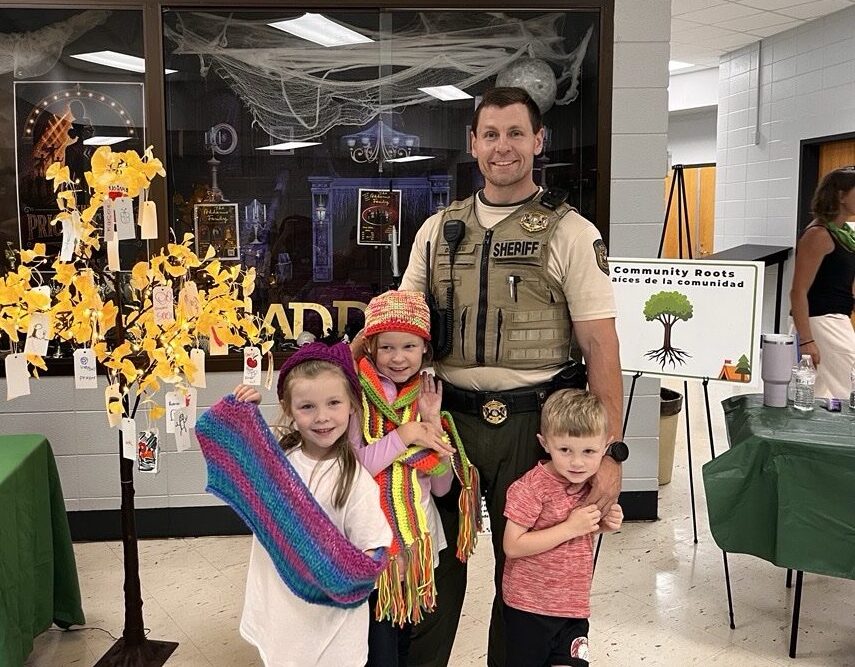
Stronger Than The Storm: An Ode to WNC’s First Responders

Stronger Than The Storm: An Ode to WNC’s First Responders

During Hurricane Helene, first responders played a critical role in Western North Carolina by conducting rescues, providing emergency aid, and helping countless communities recover from widespread devastation.

The response to this disaster showcased the unwavering dedication of these helpers and heroes—not just in the moment of crisis, but in the long, difficult path to recovery. Their work saved lives, restored hope, and reminded us that we are never alone in the storm.


On days like this, I think of the men and women who show up through all extremes and weather conditions to keep our essential services running and provide the comfort and security we depend on. While many of us shelter peacefully indoors, they step into the storm to make sure the power stays on, our homes are warm, the water keeps flowing, and so much more. Every day across the country there are lineworkers, emergency crews, dispatchers, and public safety teams and other resilient heroes who answer the call without hesitation. They head to work in freezing temperatures, navigating icy roads, and other dangerous conditions so our communities can stay safe.  This is not just a job—it’s service, courage, and love in action. Thank you for showing up when it’s hardest.  We see you and are grateful beyond words. 


Thank you Is Not Enough

Every day, first responders step into chaos and the unknown. They serve on the front lines of danger, putting themselves in harm’s way to take care of others, save lives and protect their communities.

Whether it’s a paramedic stabilizing a patient, a firefighter battling flames, or a police officer calming a crisis—these individuals carry the weight of our communities on their shoulders.

These devoted career professionals and unpaid voluneteers provide 24/7 emergency care, including weekends and holidays when the rest of us are off the clock. When disaster strikes, many public employees also jump into action as secondary responders, helping to restore utilities, reunite families and rebuild communities.

At Resources for Resilience, we recognize the hard work and life-saving sacrifices of fire service, law enforcement and emergency medical services personnel throughout Western North Carolina, and beyond.

That’s why to us honoring first responders means more than saying “thank you.” It means supporting their mental health, their emotional resilience, and their capacity to recover from what they face every day.

October 28 is National First Responder’s Day, but EVERY day is the right time to recognize and support the compassionate and courageous heroes and helpers who keep us safe, healthy, informed and connected.


The Burnout Epidemic

The courage and compassion of first responders is visible to everyone. But what’s less seen and discussed is the toll it takes on one’s nervous system.

Behind the uniform is a human being who feels stress, grief, and exhaustion just like the rest of us. The long shifts, the traumatic calls, the emotional strain of being “on” all the time—it adds up. And yet, they keep showing up and stepping out.

Burnout among first responders is an “invisible crisis” that can build quietly and slowly under the weight of long shifts, high-stakes decisions, and repeated exposure to trauma.

The constant pressure to stay composed and perform under stress can leave little room for emotional recovery. Over time, this can lead to exhaustion, detachment, and a sense of being overwhelmed or numb.

It’s also important to note that burnout doesn’t mean personal weakness—it simply means the nervous system is overloaded past its capactity. Recognizing the signs early and using tools to reset, reconnect, and restore can help first responders protect their well-being and continue serving with strength and compassion.


At Resources For Resilience™, we believe that strength isn’t just about pushing through—it’s about knowing how to reset, reconnect, and restore.

Support for Those Who Serve

First Responders already show incredible resilience just by showing up to work every day. Resiliency education isn’t about questioning your strength—it’s about sustaining it. Even the strongest individuals and teams need ways to reset, recharge, and reconnect.

Think of Resilience like any skill set- even if you’re already effective, there are still ways to strengthen and improve so that you continue for the long haul. “Sharpening the blade” will only help you in the battle!

The free tools and trainings provided by Resources For Resilience and our generous partners are designed to help first responders move more efficiently and consistently from  “survival mode” into their personal Resilience Zone of clarity, calm and connection.

  • Regulate stress in real time using simple, body-based techniques
  • Build emotional stamina through connection and co-regulation
  • Strengthen teams and communities with shared language and support
  • Prevent burnout by integrating practical self-care into daily routines

The tools we teach aren’t complicated. They’re incredibly simple, accessible, and most importantly  – scientifically proven to help people of all walks of life strengthen their capacity and continue doing what they love.

If you’re a first responder—or someone who supports them, remember that you don’t have to carry it all alone. Support is available, healing is possible, and resilience is teachable. 

Want to know more? Subscribe to our email newsletter or follow up on social to stay in the know about all of Resources for Resilience’ free trainings and community-based programs designed to help you thrive.


The Ginkgo Tree: A Living Symbol of Resilience

The Ginkgo Tree: A Living Symbol of Resilience

If you’ve attended one of our programs or seen our marketing materials, you may have noticed the ginkgo leaf. That’s no accident. At Resources for Resilience™, we chose the ginkgo as a symbol because it embodies the very essence of what we teach: the power to endure, adapt, and grow—even in the face of overwhelming adversity.

We are stronger than the storm. And like the ginkgo, we are built to last.

A Brief History of the Ginkgo Tree

  • Ancient Origins: Ginkgo biloba is the oldest surviving tree species on Earth, dating back over 200 million years—before the dinosaurs roamed.

  • Survivor of Extinction: It has withstood mass extinctions, ice ages, and dramatic climate shifts, outlasting nearly all of its botanical relatives.

  • Cultural Legacy: Buddhist monks in China and Japan cultivated ginkgos for their beauty and healing properties, planting them in temple gardens.

  • Western Discovery: German naturalist Engelbert Kaempfer introduced the ginkgo to the West in the 17th century, where it quickly captivated poets, scientists, and urban planners.

  • Hiroshima’s Hope: After the atomic bombing in 1945, six ginkgo trees near the blast site survived and still thrive today—living testaments to resilience and renewal.

The ginkgo reminds us: healing is natural, growth is possible, and strength lives in renewal.

Ginkgo as a Metaphor for Mental Health

The ginkgo’s story mirrors our own human journey through trauma, healing, and growth. Like the ginkgo:

  • We endure. Life’s challenges—grief, anxiety, loss—can feel like emotional wildfires. But just as the ginkgo withstood nuclear devastation, we too can survive what feels unsurvivable.

  • We regenerate. The ginkgo sheds its leaves each fall and returns each spring. Healing is cyclical. We let go, we rest, we begin again.

  • We adapt. Ginkgos thrive in polluted cities and harsh environments. Likewise, we can learn to navigate stress, change, and uncertainty with tools that ground and support us.

  • We root deeply. The ginkgo’s strength lies in its roots. For us, that means connection—to ourselves, to others, and to practices that restore balance.

Late in November, on a single night
Not even near to freezing, the ginkgo trees
That stand along the walk drop all their leaves
In one consent, and neither to rain nor to wind
But as though to time alone: the golden and green
Leaves litter the lawn today, that yesterday
Had spread aloft their fluttering fans of light.
 
What signal from the stars? What senses took it in?
What in those wooden motives so decided
To strike their leaves, to down their leaves,
Rebellion or surrender? and if this
Can happen thus, what race shall be exempt?
What use to learn the lessons taught by time,
If a star at any time may tell us: NOW.
Howard Nemerov

Nature-Inspired Practices for Resilience

We can channel the ginkgo’s strength in our own lives every day:

  • Ground yourself, like its deep roots in the soil. Find stability in stillness or movement, and noticing what’s in you and around you, in the present moment.
  • Release what no longer serves you, like shedding of leaves. Let go of stress, habits, or thoughts that weigh you down.
  • Reach out, like limbs and branches. Resilience grows through community and connection, not isolation.

Thank you to the ginkgo for reminding us that resilience isn’t about avoiding hardship—it’s about growing through it, persisting at all costs. Whether we’re navigating everyday stress or much deeper traumas, we each have the capacity to heal, adapt, and thrive.

Want more? Subscribe to our email list today, and explore free tools and trainings that help individuals, teams, and communities grow stronger—together.

Helping The Helpers: Resiliency Education Expands in WNC Amid State-wide Recovery Efforts

Helping The Helpers: Resiliency Education Expands in WNC Amid State-wide Recovery Efforts

FOR IMMEDIATE RELEASE

October 1, 2025 — ASHEVILLE, NC: Asheville-based nonprofit Resources For Resilience(RFR) has collaborated with a variety of state agencies, managed care organizations and mission-aligned nonprofits to generate a major expansion in resiliency programming and education across 25 Helene-impacted counties in Western North Carolina in the wake of Hurricane Helene.

RFR’s signature trauma-informed training and community support are made possible thanks to a collaborative effort from several local and regional entities including: The NC General Assembly, The NC Department of Health and Human Services (NCDHHS), The Governor’s Recovery Office for Western NC (GROW-NC), Vaya Health, Americares, Direct Relief and the Evergreen Foundation NC.

The contributions from these generous strategic partners, totaling nearly $3 million, support a year-long strategy for the organization to deliver hundreds of FREE resiliency-building trainings, professional development workshops, and community events.

To date, over 4,200 individuals in the region have already been reached this year through RFR’s programming aimed at equipping individuals, families and teams with practical tools for healing, resilience, and recovery.

“Resources For Resilience is proud to support the helpers and heroes who have been pivotal to Western North Carolina’s recovery after Helene,” said Ann DuPre Rogers, Executive Director of RFR.


“This project is our way to give back and show our appreciation for everyone that works to keep our communities safe, healthy, informed, and connected.”  She continued, “Thanks to our generous partners, we’re able to expand and deepen our impact, ensuring that the selfless public servants and other dedicated professionals across our region have access to the tools they need to thrive.”

With this increase in funding, Resources For Resilience has already put several projects and systems into place to support their expanded reach. This includes hiring new staff and consultants, launching an updated website, and coordinating an inaugural professional development event with a focus on culturally-responsive resiliency education.

Most importantly to their mission, Resources For Resilience is continuing to offer trauma-informed programming for local residents, agencies, and organizations at no cost. These sessions are designed to help participants regulate their nervous systems, restore emotional balance, and foster overall resilience.

The organization is targeting these free trainings to a variety of service-based audiences, including first responders and emergency personnel, behavioral and public health providers, utility and communications professionals, and other essential workers supporting rural and underserved communities across WNC. A complete list of these offerings can be found here: bit.ly/GROWNC-Offerings

Resources For Resilience has also implemented a series of recurring virtual events that are also completely free to WNC residents impacted by Helene:

Interested participants may visit resourcesforresilience.org/events to see a full calendar of upcoming programming and scheduled events.  

About Resources For Resilience

Resources For Resilience™ is a Western North Carolina-based nonprofit organization specializing in sharing simple strategies and research-based resources to help individuals, teams and communities manage stress, prevent burnout, and build resilience in themselves and others. Founded in 2017, RFR is proud to work closely with those who serve at the center of our communities to ensure that everyone has access to the tools they need to thrive. Their signature trainings and professional development workshops help participants keep themselves, their loved ones, and the people they serve healthy and connected.

Media Contact

Michelle Tyler, Director of Operations
marketing@resourcesforresilience.org

Further Reading

Vaya Health & Resources for Resilience Partner to Deliver Trauma-Informed Support Across WNC Following Hurricane Helene” (May 2025)