Practical Tools For Finding Steadiness and Strength in Turbulent Times

Practical Tools For Finding Steadiness and Strength in Turbulent Times

In the previous post, we learned about how and why the news cycle and current events can affect our nervous systems. Now, we’ll share practical ways to help you help you reduce overwhelm and stay steady in the midst of ongoing headlines.

Through simple somatic tools and mindfulness practices, you can protect mind, body, and spirit and from there, even your family and community. The best part: All of these techniques are completely FREE and accessible to anyone, anywhere.

The goal isn’t to stop caring or to tune out completely. The goal is to stay regulated enough to think clearly and respond intentionally.

Connect

Humans are wired for connection, not isolation. Safe, supportive relationships are one of the most powerful antidotes to chronic stress and trauma. This includes friends, family, neighbors, coworkers — and yes, pets count, too! It can also help to connect with people who make you feel understood and supported.

Research shows that we regulate best with others. After taking in distressing headlines, being present with a calm and trusted person helps your nervous system receive a crucial message: “You’re not alone. You’re safe right now.”Comforting conversation, shared breathing, gentle touch, or simply sitting together can help systems synchronize and soften.

Sense In

Even in fear, grief, and uncertainty, subtle sensations of safety and strength still exist within us.

Bring attention inward. Slowly scan your body from feet to head and notice where you feel most neutral or at ease — even slightly. Observing sensations without judgment interrupts stress spirals and brings the thinking brain back online.

The warmth of your clothing
The firmness of the ground beneath your feet
A memory of being connected or cared for

These moments of awareness awaken our inner resources (our human-ness, our dignity, courage, love)— that difficult circumstances cannot erase. When we begin to notice “what else is true” with our thoughts, emotions, and bodily sensations are all connected, we can better understand the rhythms of our nervous system and learn how to gently guide it back to steadiness.

Reduce Exposure

Staying informed matters, but constant exposure can increase anxiety. If you feel anxious, heavy, numb, or dysregulated after consuming the news, that’s a sign it may be time to set a boundary.

One powerful shift is READING the news instead of watching or listening to it. When you read, you remove the added intensity of audio and visual elements, and the gentle, rhythmic eye movements can also help the nervous system settle.

You still receive the information, but your nervous system isn’t pulled into as much urgency or panic when you can process them in your own internal voice.

Another strategy is to choose intentional check-in times to “doomscroll” instead of continuous consumption throughout the day.


A recent study published by the American Medical Association found that a one‑week social media detox significantly reduced anxiety, depression, and insomnia in young adults – suggesting that suggests that even short breaks can meaningfully support emotional regulation.

Look for the Helpers

Consider balancing your media consumption with a mix of informative news, as well as positive, uplifting, and heart-warming messages too! This is not about ignoring difficult realities, but creating BALANCE in the type of content you’re consuming.

If you’re only being exposed to distressing headlines, your nervous system will continue to exist in a heightened state of mistrust and self-protection. Stories and images of kindness, compassion, nature, and human resilience remind us that there is still so much good in the world.

You can also find joy and hope in humanity by visiting art museums, seeing live music, theatre, or simply watching people interact at the park, at restaurants, and other third spaces where people gather.

‘Bloomscrolling’: The intentional practice of scrolling for what uplifts or furthers growth, learning, connection, or creativity. (i.e the antonym of ‘doomscrolling’)

“Name It to Tame It”

Most people care deeply, however they simply don’t have the tools or support to stay present with difficult or unpleasant emotions.

For some with an already overloaded nervous system, it feels safer to “dissociate”, check out, or look away from the problems around them.

To move through these difficult chapters with compassion, we can acknowledge our collective suffering and admit that things are not going well. Naming your experience as physiological reduces internal shame and helps the brain process what’s happening.

Remember that two things can be true at once: You can care deeply AND still protect your mental health.

Practice Self-Care

Sleep, nourishment, play, rest, and routine help signal safety to the nervous system, even when the world feels unstable. Calming “analog” hobbies and activities like reading, drawing, coloring, crochet, knitting, or playing a board game can help give your brain a break and establish a sense of quiet normalcy.

Take Action

Anger and frustration are often stigmatized as “negative’ or “destructive” emotions, but they can also be powerful motivators for change.

These heightened emotions are a signal that something matters, something hurts, or something needs to be addressed or improved. This can give people the energy to set boundaries, speak up, or take action in situations where they might otherwise stay silent. When anger and frustration and acknowledged and channeled with intention, they become a source of clarity, action, and protection.

Acts that could be considered include calling local representatives, making a charitable donation, volunteering your time or skills, or attending a community meeting or educational training.


“We are getting so much passive information and we have so few opportunities to act. We are tired then, not from doing too much, but from doing too little. The more time you spend doing something, the less exhausted you are by the onslaught of information that tries to convince you that the only thing you can do is watch what is happening to you.”

Dr. Tressie McMillan Cottom


Reset The Body

Our signature ‘Rapid Resets” are quick, simple body-based tools to remind the nervous system of safety.

  • Ground: Sit, stand, or lie on something solid. Feel the sturdiness and support beneath you — the chair, the floor, the wall. What kind of work is gravity doing for you?
  • Orient: Slowly look around your environment. Notice shapes, colors, sounds, light, or movement. Turning your head and scanning your surroundings signals to the brain that this moment is different from the threat you’re witnessing on a screen.
  • Take a Sip: Drinking something— especially warm or cold liquids — engages multiple sensory pathways. Notice the temperature, weight, and sensation of swallowing to anchor yourself in the present.
  • Sing or Hum: Vocalization stimulates the vagus nerve, helping calm the nervous system. Humming, singing, or making a steady sound (even quietly) can be surprisingly regulating.
  • Tap Side-to-Side: The “Butterfly Hug” uses gentle bilateral stimulation. Cross your arms and alternate tapping left and right at a pace that feels soothing.
  • Take a Walk: Movement helps discharge stress. Pay attention to your steps, your breathing, and the rhythm of your body moving through space. Bonus if you can let the sun hit your face, and touch grass- literally.
  • Do Heavy Work: Engaging large muscles — pushing, lifting, sweeping, gardening, cleaning — helps release stored stress and restore a sense of strength and agency.
  • Push Against a Wall: Using your body’s strength to push against something solid can help release excess energy and create a felt sense of stability.

Reminder: You don’t need to use every tool, every time. Even one or two can gently shift how your body responds during stressful moments — especially after reading, watching, or scrolling through difficult news.


“When people cultivate inner harmony, they radiate steadiness to those around them. Even one person’s calm presence can soothe and reassure; this presence can become an anchor for a community.”

Elaine Miller-Karas

Why These Tools Work

All of these practices regulate the nervous system — the foundation of how we think, feel, and respond to stress.

With consistent use, these tools:

  • Shorten recovery time after stress
  • Reduce the intensity of trauma responses
  • Build confidence in navigating future stress
  • Strengthen long-term resilience

In other words, when the regulation process is repeated and practiced regularly, regulation can occur easier and faster over time, and that ripple eventually extends out to those around you.

Your steadiness has the power to influence the people around you. We can learn, heal, and recalibrate together as one.


Resources For Resilience

If you’re feeling frustrated, anxious, or overwhelmed by current events, you’re not alone. Nervous system regulation is not about pretending everything is fine. It’s about finding practical ways to rest, reset, connect, and take thoughtful action without burning yourself out.

If you need space to pause and find support, Resources for Resilience offers free tools, workshops, and community programs designed to help individuals and communities regulate stress, process overwhelm, and build emotional resilience during challenging times.

Ready to take the next step?

Awareness & Activation: How the News Cycle Affects Our Nervous Systems

Awareness & Activation: How the News Cycle Affects Our Nervous Systems

If you’ve noticed yourself feeling heavy, unsettled, or mentally exhausted after consuming the news, you’re not alone.

Many people feel overwhelmed by the volume and intensity of today’s news cycle. Constant notifications, breaking headlines, and repeated exposure to intense graphic coverage can make it difficult for the body and mind to rest and recover.

This goes beyond simply “staying informed.” The human nervous system evolved to respond to immediate, in-person threats — not continuous exposure to global information streams. When we encounter repeated signals of danger, uncertainty, or loss, the body may respond as though the threat is happening in real time.

Over time, this ongoing activation can contribute to stress, emotional fatigue, irritability, and difficulty concentrating or sleeping.

In this two-part series, we’ll explore how news and social media exposure affect the nervous system and share simple, practical tools to support regulation and resilience.

Humans are not designed to be this “plugged in” and connected digitally. Because our ancestors never had the media or technology, our bodies and minds are not equipped to absorb or process this level of information.

Signs of Emotional Overload

Repeated exposure to high-intensity headlines and continuous media coverage can increase stress, uncertainty, and emotional fatigue. Parents, caregivers, and individuals with a history of trauma may be especially sensitive to this type of coverage.

News often emphasizes danger, disruption, and loss, which can activate the body’s natural survival responses.

If you are experiencing any of the following emotions or sensations, these reactions are common during periods of sustained stress:

  • Grief
  • Anger or Rage
  • Fear or Anxiety
  • Shock
  • Numbness
  • Fatigue or Exhaustion
  • Dread
  • Mistrust or Suspicion
  • Hopelessness
  • Racing heartbeat
  • Muscle tension
  • Shallow breathing
  • Nightmares

These are not signs of weakness. From a physiological perspective, the body is reacting in ways that are consistent with survival states.

Studies have linked repeated exposure to traumatic events – as well as high-volume news or social media coverage of those events – with increased anxiety, depressive symptoms, and sleep disruption.

Why the News Hits So Hard

Our nervous systems evolved to keep us alive, not informed. When we are exposed to repeated images of danger and loss, the body may respond as though something happening far away is happening close to home.

In other words, you don’t need to be directly impacted by an event for your body to react to it. Witnessing harm — especially when it involves your community or sense of safety — can activate similar survival responses.

Watching, listening to, or scrolling through the news can trigger fight, flight, or freeze responses within the nervous system. When activation remains elevated for extended periods, areas of the brain responsible for reflection, problem-solving, and connection can become less accessible.

In this state, we can react, but we struggle to reflect clearly. We can feel deeply yet find it harder to imagine solutions or take thoughtful action.

Strong emotional responses to alarming or high-impact events are natural. Regulation helps ensure that fear or anger do not override our ability to think clearly, stay connected, and act intentionally.

Why Nervous System Regulation Matters

The nervous system plays a central role in how we think, feel, and respond to the world around us. When it feels safe, the brain operates at a higher-level of functioning:

  • Creativity — generating ideas and imagination
  • Critical thinking — seeing nuance and multiple perspectives
  • Problem-solving— considering options and flexibility
  • Connection — listening, communicating and empathizing with others

This regulated state is what we call our Resilient Zone. Once we can regain this state of mental calm and clarity, greater wisdom and meaningful action become possible.

The good news: regulation skills can be learned and strengthened over time. Simple, consistent practices can reduce the intensity and duration of stress responses and build confidence in your ability to return to balance.

As individuals become more consistently regulated, that steadiness can positively influence families, workplaces, and communities. So one person’s internal safety and inner harmony become a collective resource for many. Regulation is both a personal and collective resource.

“Through mindful awareness and compassion, we strengthen the brain’s resilience circuits.”

Elaine Miller-Karas
Small Actions, Big Impact

Resources For Resilience offers practical tools to help calm the nervous system and restore balance.

Our free trainings and accessible programming teach simple, science-based skills that support regulation, strengthen connection, and make it easier to show up for yourself and others – even during periods of uncertainty.

These tools can be practiced anywhere, by anyone.  Learn more in the next post!

Resilience is something we build together, one moment at a time. Nervous system healing doesn’t mean ignoring what is happening in the world. It means learning to stay present without becoming overwhelmed by it.


Finding Resilience Through Connection: A Conversation with Katherine Gutschenritter

Finding Resilience Through Connection: A Conversation with Katherine Gutschenritter

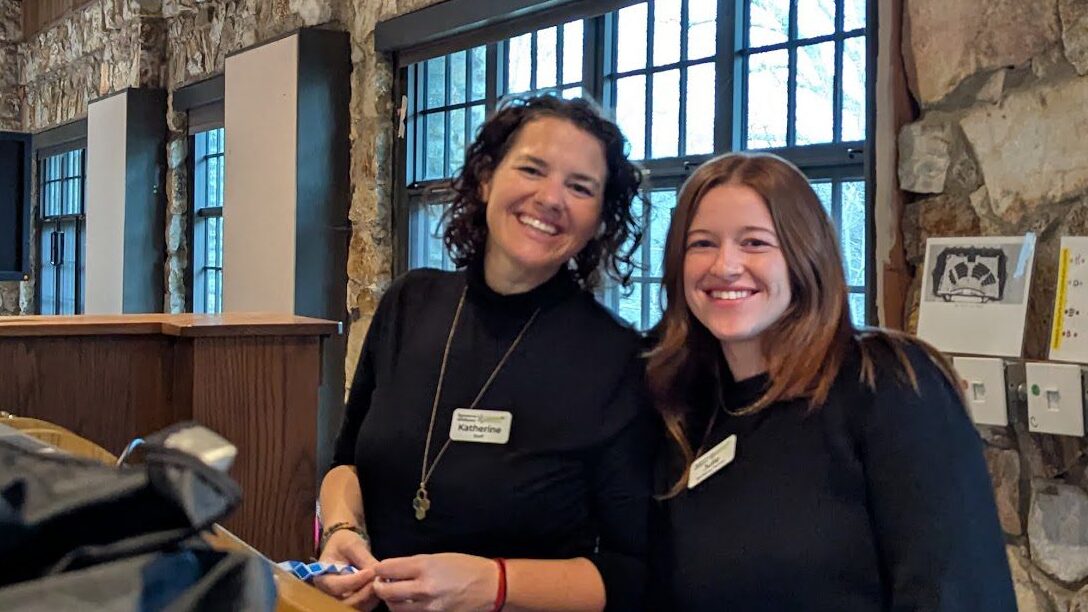
My name is Katherine, and I’m a Program Coordinator at Resources For Resilience. My role is largely behind the scenes, supporting training logistics, coordination, and the systems that help our work reach communities across North Carolina. I’m also a trainer, which allows me to stay connected to the heart of the work. I love being able to support both the people delivering this work and the communities receiving it. It feels meaningful, practical, and deeply human. 

Though I live in Asheville now, I’m originally from Atlanta and have lived many places across the U.S. and the world. Moving has always been a part of my story. But when I arrived in Asheville a handful of years ago, something shifted. It truly felt like home. 

There is something about this community that brings a deep sense of belonging, of being seen and heard. That feeling is closely connected to the work I do now. 

How I Came to This Work 

Before joining Resources for Resilience, I worked in education as an administrator. Around the time of the pandemic, I was introduced to Resources for Resilience through a virtual training. The work immediately resonated with me. 

Like many people, I have experienced burnout in my own life. The training helped me better understand my nervous system and why stress was showing up the way it was. What stood out was how accessible and grounding the tools felt. They weren’t overwhelming or prescriptive. Instead, they made it possible to stay engaged in challenging work while also taking care of yourself. 

That idea stayed with me. I continued following the organization, and when an opportunity opened up to become more involved, it felt like a natural next step. 

What Resources for Resilience Does 

Resources for Resilience provides training that helps people understand their nervous systems and how nervous system responses show up in everyday life, especially in high-stress environments. This work supports people who are doing difficult, meaningful work in their communities and need practical tools to manage stress, stay connected, and continue showing up. 

One of the most powerful aspects of this work is how immediately applicable it is. Sometimes it’s a full training. Other times, it’s a brief conversation that helps someone feel more grounded in the moment. You don’t need hours or days to begin experiencing the impact. 

Community Before & After Helene 

After Hurricane Helene, the importance of connection became even more visible. Many lost electricity, internet, and phone service for days. People walked their neighborhoods, checked on one another, and knocked on doors. Neighbors who barely knew each other became sources of support. 

What stood out wasn’t just the immediate response, but the way people continued to show up. I’ve heard countless stories of individuals stepping into roles they never expected, discovering new purpose, and committing more deeply to their communities. In moments like that, it becomes clear that connection is our first line of defense for anything. 

Why Connection Matters 

Having lived in many places, I’ve always valued relationships, but this work helped me understand just how foundational connection really is. As humans, there is an innate need for belonging and connection that exists in all of us, and that need doesn’t disappear when life gets busy or difficult.  

In many ways, modern life has moved us toward isolation. We live in our own spaces, often disconnected from those around us. This work reminds us that even small moments of connection matter. Making eye contact, sharing a smile, recognizing a familiar face. These moments help regulate our nervous systems and create a sense of safety. 

Rethinking Resilience 

Before this work, I thought resilience meant bouncing back after something hard. Now, I see resilience as the ability to adapt while staying connected. It’s about having tools that help you manage stress, understand your responses, and navigate challenges without disconnecting from yourself or others. 

When you understand your nervous system, you have more choice in how you show up. You also gain the ability to influence how others show up around you. It is so powerful to understand your nervous system and your nervous system responses using simple tools.  

A Hope for the Work 

If I could wish for anything, it would be that every single human could receive Resources for Resilience training. There is often confusion or misunderstanding about what the nervous system is and how it works, and this training helps unlock that understanding in a way that feels empowering and practical. 

I wish every human being could receive Resources For Resilience training. This work deserves to be widespread.

——

Conversations In Resilience is a storytelling series from Resources for Resilience, created to elevate the voices of the people doing this work every day. 

RELATED POSTS