Simple Tools To Help Navigate Community Tragedy & Trauma

Simple Tools To Help Navigate Community Tragedy & Trauma

If you’ve ever felt ‘gutted’ after hearing about a violent crime or crisis in your local community, you’re not alone. Community violence affects millions of people and their families, schools, and communities every year.

Tragedy and trauma can take many forms, including homicides, fatal accidents, and other events that impact the safety and well-being of individuals and communities.

Many uncomfortable feelings can result when something has happened to us directly, or from witnessing or hearing about what happened to others in our community. And it can be hard to shake these feelings, especially if the stress is ongoing.


At Resources for Resilience, we believe that understanding what is happening in our bodies and brains can help us navigate difficult moments with greater compassion for ourselves and others. The following information offers practical tools to support healing, mental wellness, and resilience during challenging times.

Community tragedy can affect all of us. Even when we are not directly impacted, these events can disrupt our sense of safety, stability, and connection.
Exposure to violent crime can have lasting effects on both individual and community health, with impacts that persist for years or even generations and compound the immediate harm.

Why Community Violence Affects Us So Deeply

Tragedy and trauma can affect entire communities— the families and neighbors of those involved, as well as educators, faith leaders, first responders, and anyone connected to the place where the incident occurred.

When intentional acts of harm or hate occur near our homes, schools, workplaces, or neighborhoods, they can shake our sense of safety and stability. Even if we are not directly affected, knowing violence has occurred in our community can have a profound impact on our well-being.

Exposure to violence or trauma events affects more than our thoughts—it can also affect our bodies and nervous systems. Our brain’s amygdalas (our threat-detection systems) may go into overdrive and stay on high-alert.

When violence happens close to home, it can trigger both emotional and physical stress responses in the body. Any sensations or feelings you experience are all normal, natural human responses to threat, loss, and uncertainty.

Nervous System Regulation is about creating enough stability within ourselves to think clearly, stay connected, and take meaningful action so that we can show up for our communities.
Anytime someone experiences life-threatening danger, significant injury, or loss, there can be PTSD, anxiety, depression or other stress-related difficulties that affect interpersonal relationships and healthy development.

“Making Sense” of Tragedy

Our brains find uncertainty or ambiguity stressful. As such, they will naturally try to “intellectualize” or make sense of traumatic events. This helps restore the feeling that the world is comfortable, predictable, orderly, and manageable.

There are many psychological coping mechanisms, processes and patterns people may have  after experiencing tragedy or trauma:

  • Looking for explanations to regain a sense of control.
  • Asking questions like “Why did this happen?” or “Why would someone do this?”
  • Searching for missed warning signs to prevent future events.
  • Replaying “If only…” or “What if…?” scenarios.
  • Simplifying causes or motives to make sense of complexity.
  • Assigning blame to people, systems, or institutions.
  • Seeking justice or accountability.
  • Looking for reassurance through new routines or safety measures.
  • Comparing the event to past tragedies for perspective.
  • Turning to spiritual, religious, or philosophical beliefs.
  • Replaying the event and ruminating on it.
  • Avoiding people or places connected to the event.

So many of these responses share the same underlying psychological goals: restoring physical, emotional, or psychological safety after an event that has disrupted them.

According to the CDC, youth and young adults are disproportionately impacted by violence in their communities. Exposure to violence as victims, perpetrators, or witnesses creates adverse childhood experiences (ACEs) that are more likely to have physical and mental health conditions and behavioral difficulties later in life.
Resources For Resilience was founded upon the findings of the Adverse Childhood Experiences (ACEs) study. In the ACEs framework, community violence is a core ACE because it can disrupt a child’s sense of safety, trust, and attachment and increase the risk of long-term emotional, behavioral, and physical health problems later in life.

Understanding Your Response to Trauma

The human nervous system is designed to respond to percieved threats and danger. Witnessing or hearing about crime or violence nearby can activate survival responses such as Fight, Flight, Freeze, or Shutdown.

When individuals and communities experience a traumatic event, the nervous system can become overwhelmed and dysregulated. You may find yourself feeling:

  • Shocked or distressed
  • Afraid or anxious
  • On edge or irritable
  • Disconnected or numb
  • Angry or frustrated
  • Grief or sadness
  • Exhaustion or overwhelm
  • Confusion or disbelief

Some people feel “amped up” with excess energy and reactivity. Meanwhile, others may feel “shut down”-  depleted, drained, or distant. All of this is ok.

When we perceive danger or threat, our nervous systems automatically activate those survival responses designed to protect us.

Sensations of dysregulation: muscle tension, shallow breathing, rapid heartbeat. Sensations of regulation: relaxed muscles, deep breathing, steady heart rate.

Even after a threat has passed, our bodies can remain stuck in survival mode. Everday sights, sounds or smells that remind us of the traumatic event such as sirens, helicopters, or news coverage may trigger strong emotional or physical reactions.

When stress remains elevated over time, it can contribute to emotional fatigue, sleep difficulties, anxiety, and a lingering sense of unease. We may find ourselves taking extra precautions in our lives, constantly checking for updates, looking at people or situations more suspiciously, or replaying details long after the immediate crisis has passed.

For those who knew someone directly affected by a tragic event, or who are closely connected to those impacted, these responses may be even more intense. This is a natural and understandable reaction.

In times of crisis, uncertainty, or community trauma, it is normal to have big feelings. Traumatic events affect people in many different ways, and it is important to remember that there is no “right” way to respond.
Communities can unite around mourning, rebuilding and recovery OR may become divided by feelings of anger or injustice, and debates over causes, responsibility, and prevention. What part will you play?

Practical Ways to Support Yourself & Your Community

It’s normal for us to be knocked out of our Resilient Zone. The good news is that nervous system regulation is a skill that can be strengthened through simple tools and consistent practices:

Sense In

Acknowledging and naming your emotions can reduce shame and support healing. Simply noticing your physical experience is often the first step toward regulation. Pause and notice what is happening in your body. Ask yourself:

  • Am I feeling activated and restless?
  • Am I feeling shut down or exhausted?
  • Am I somewhere in between?

    Connect With Others

    When difficult moments happen, we have a choice. We can allow pain or grief to divide and separate us, or we can come together to remind one another that hope is still alive, and that no one needs to walk through difficult times alone.

    In the coming days and weeks after tragedy, spending time with trusted friends, family members, neighbors, or community groups can help restore a sense of safety and belonging.

    It’s important to continue strengthening relationships and building hope together. Create or attend safe, supportive spaces where mourning, healing, love, unity, and honest conversations are welcome and encouraged.

    • Memorials and rememberences
    • Candlelight vigils
    • Community potlucks
    • Prayer services
    • Grief ceremonies
    • Storytelling sessions
    • Listening circles

    It’s also important to let others know you can support each other during this difficult time. Phrases that help:

    • “You make sense to me.”
    • “I care about you.”
    • “I’m here.”


    Acknowledge Your Resources

    During stressful times, our attention naturally focuses on danger or loss. We can break this thought-loop by looking for signs of safety, care, and community. Micro joys are how we survive macro grief.

    Think about people, places, memories, pets, activities, or personal strengths that help you feel more grounded or supported.

    Ask yourself:

    • What is helping me right now?
    • Who can I lean on?
    • What moment gave me hope?
    • What else is true right now?

    Spend a few moments bringing one of these resources to mind and notice how your body responds.

    Turn Concern Into Action

    We can transform feelings of grief or powerlessness into greater meaning and purpose. Consider:

    • Checking in on a friend or neighbor
    • Attending a community event
    • Volunteering for a local nonprofit
    • Memorializing victims
    • Supporting local healing and prevention efforts
    • Setting boundaries around news and media exposure

    Use Rapid Reset Tools

    Simple body-based practices can help calm the nervous system. These can be done by nearly anyone, anywhere.

    • Taking a slow sip of water
    • Pushing against a wall or chair
    • Going for a walk
    • Singing or humming
    • Tapping your body side to side
    • Lifting heavy objects or doing household or yard work
    • Looking around and noticing your surroundings
    • Feeling your feet on the floor

    The key is to really pay attention to the sensations in your body before, during, and after you use one of these tools.

    Seek Support

    Remember, navigating stressful events takes time, and everyone responds differently. However, if you or others are having an especially hard time, we encourage you to connect with local support services for additional help and resources.

    When we feel calm, alert, and connected, we can think clearly, solve problems, and respond with more care and intention.

    Healing Happens Together

    Your steadiness matters. Every time someone chooses a healthy, supportive, or regulated response, they contribute to the well-being of the entire community.

    Resilience isn’t about pretending everything is okay. It’s about staying present with difficult realities while maintaining the ability to care for ourselves and one another.

    At Resources for Resilience, we know that healing happens over time, through patience and connection. Together, we can create moments of calm, support, and hope—and move from surviving to thriving.We are here for you!

    If your group or network could benefit from additional training and support following a difficult event, we’re here to help. Contact us today to schedule a presentation for your group.

    We are most powerful and capable, both as individuals and as a collective, when we are in in our ‘Resilient Zone.’ This is where we can respond instead of react, connect instead of disconnect.
    Reminder: Resilience is a shared resource—we build it together through relationships, learning, and practice. Taking care of your own nervous system ultimately helps strengthen your family, workplace, and community.

    Next Steps

    Two Years Later: Acknowledging Helene-Related Trauma & Continued Healing Across WNC

    Two Years Later: Acknowledging Helene-Related Trauma & Continued Healing Across WNC

    It’s hard to believe that two years have passed since Hurricane Helene changed Western North Carolina forever.

    As September and October approach, communities across our mountain region find themselves reflecting on a date that now exists as a dividing line in memory: life before Helene, and life after.

    For many residents, Helene was more than a storm. It was a moment of profound loss, uncertainty, and disruption. Homes were damaged or destroyed. Families were displaced. Beloved landscapes were altered. Lives, routines, and plans changed in ways that no one could have anticipated.

    And yet, alongside the grief and devastation, Helene revealed something equally profound: the extraordinary strength, compassion, and resilience of Appalachian communities.

    As we mark two years since Helene, we pause to remember what was lost, honor what has been rebuilt, and acknowledge the healing that is still unfolding.

    “There’s lots of loss, lots of grief, lots of extreme stress, but also, so many stories of connection and love and neighbors helping neighbors and people coming to each other’s aid, and figuring it out together.”

    Executive Director, Ann DuPre Rogers (Jan 2025)


    Reflecting on the Last 24 Months

    The aftermath of Helene brought challenges that many communities are still navigating today.

    The storm left behind damaged infrastructure, interrupted livelihoods, environmental impacts, and deep emotional wounds. Recovery has required patience, persistence, and tremendous collective effort.

    Across Western North Carolina, neighbors showed up for one another in countless ways—clearing debris, sharing supplies, repairing homes, offering childcare, and providing emotional support. These acts of care became more than moments of kindness; they formed the foundation of our region’s recovery.

    Today, many signs of progress are visible. Roads have reopened. Homes have been repaired. Businesses have returned. Communities continue to adapt and rebuild.

    Yet significant challenges remain.

    Funding gaps continue to affect many rural areas throughout the 25 Helene-impacted counties. Environmental restoration efforts are ongoing. The economic impacts of the storm continue to unfold, and many families are still working toward stability and recovery.

    Our work continues. And so does our HOPE!


    Grief anniversaries can hit in unexpected ways.  Your body and nervous system remember the emotional and physical experience of the past, and bring feelings of anxiety, sadness, anger, guilt, or numbness back to the surface. Whatever shows up, meet it with gentleness and compassion. It’s ok to not be ok. 


    Understanding the Lasting Impact of Trauma

    While physical recovery is easier to see, emotional recovery often takes much longer.

    One way to think about trauma is as experiencing “too much, too fast.”

    In the case of Helene, few people could have anticipated the magnitude of what was coming. During a crisis, many of us instinctively enter survival mode. We compartmentalize emotions in order to make it through the immediate challenges before us.

    That response can be incredibly effective in the short term.

    But over time, emotions that are pushed aside can remain with us. Experiences and feelings may become stored in our bodies and nervous systems, sometimes resurfacing months—or even years—later.

    The familiar fight, flight, or freeze responses that help us survive disasters can begin to affect our well-being when they persist for too long. The impacts may show up as anxiety, depression, exhaustion, headaches, sleep disruptions, high blood pressure, emotional distress, or a combination of physical and emotional symptoms.

    Another common experience is survivor’s guilt, or what some describe as survivor’s grief. These feelings often arise from our deep capacity for connection and care. We carry one another’s stories, worry about our neighbors, and feel others’ pain alongside our own.

    For many people across Western North Carolina, the anniversary of Helene may reactivate these emotional experiences.

    That is completely normal. Trauma anniversaries can affect us in ways we do not always expect.

    “I’ll never forget the Helene gratitude. I can let go of the grief, but the gratitude I hope that I’ll never forget. Every day is about experiencing more of the grateful part.”

    Nicole K., WNC Resident

    There Is No Right Way to Feel

    The emotional aftermath of Helene continues to be deeply felt throughout our region.

    Recovery is not only about rebuilding structures. It is about healing hearts, relationships, and communities.

    Anniversary dates of traumatic events can stir powerful emotions. Some people may experience increased stress, anxiety, sadness, or irritability. Others may feel numb or disconnected. Some may find themselves avoiding reminders of the storm altogether.

    All of these responses are valid. Each person’s healing journey is unique, and there is no single “right” way to navigate this milestone.

    You may experience:

    • Overwhelm
    • Grief and sadness
    • Numbness
    • Avoidance
    • Shock
    • Reflection
    • Gratitude
    • A mixture of many emotions at once

    Each person carries their experience differently.

    As we move through the healing process, there will be days when sadness feels close to the surface. There may be moments of anger, fear, tenderness, or exhaustion. And there may also be moments of joy, gratitude, and connection.

    Both can be true. We can honor loss while still recognizing growth, and we can remember what happened while still appreciating how far we’ve come.

    The Grief, and the Gratitude

    Two years later, we continue to be inspired by the countless people who helped carry our communities through the hardest days:

    • The first responders who answered urgent calls.
    • The healthcare workers who cared for those in need.
    • The educators who supported children amidst uncertainty.
    • The utility crews, public servants, nonprofit leaders, behavioral health providers, faith communities, volunteers, and neighbors who showed up day after day.

    THANK YOU to these heroes and helpers whose compassion, courage, and commitment helped light the way forward. Your legacy of service and the countless stories of neighbors helping neighbors continue to define our region today.


    Finding Ways to Remember & Heal

    Many people benefit from creating intentional space around meaningful anniversaries.

    That may look like:

    • Cooking or baking a favorite meal
    • Volunteering in your community
    • Attending a local commemorative event
    • Spending time in nature
    • Practicing meditation or reflection
    • Participating in a support group
    • Attending an educational workshop or training
    • Connecting with family, friends, or neighbors
    • Participating in a healing retreat
    • Creating new rituals and traditions of remembrance

    There is room for every person in Western North Carolina to grieve, process, connect, and heal in ways that feel meaningful to them. As we approach Helene’s second anniversary, may you find ways to honor this time that feel authentic and supportive for you.

    Resources for Resilience remains committed to supporting communities as they navigate the ongoing impacts of disaster, stress, and trauma. We are proud to offer community-centered programming designed to provide connection, practical tools, research-backed resources, and opportunities for reflection and healing.

    While our programming is not a replacement for professional mental health treatment, they are especially helpful for those serving on the frontlines of community well-being, including first responders, behavioral health professionals, educators, public officials and civil servants, healthcare workers, community volunteers, and any other professionals dedicated to keeping our communities safe, informed, healthy, and connected.

    2026 Helene-Anniversary Programming

    Resources For Resilience continues to hold space for the many emotions WNC residents may be experiencing by offering judgement-free, trauma-informed opportunities to learn, reset, and reflect together in a community setting.

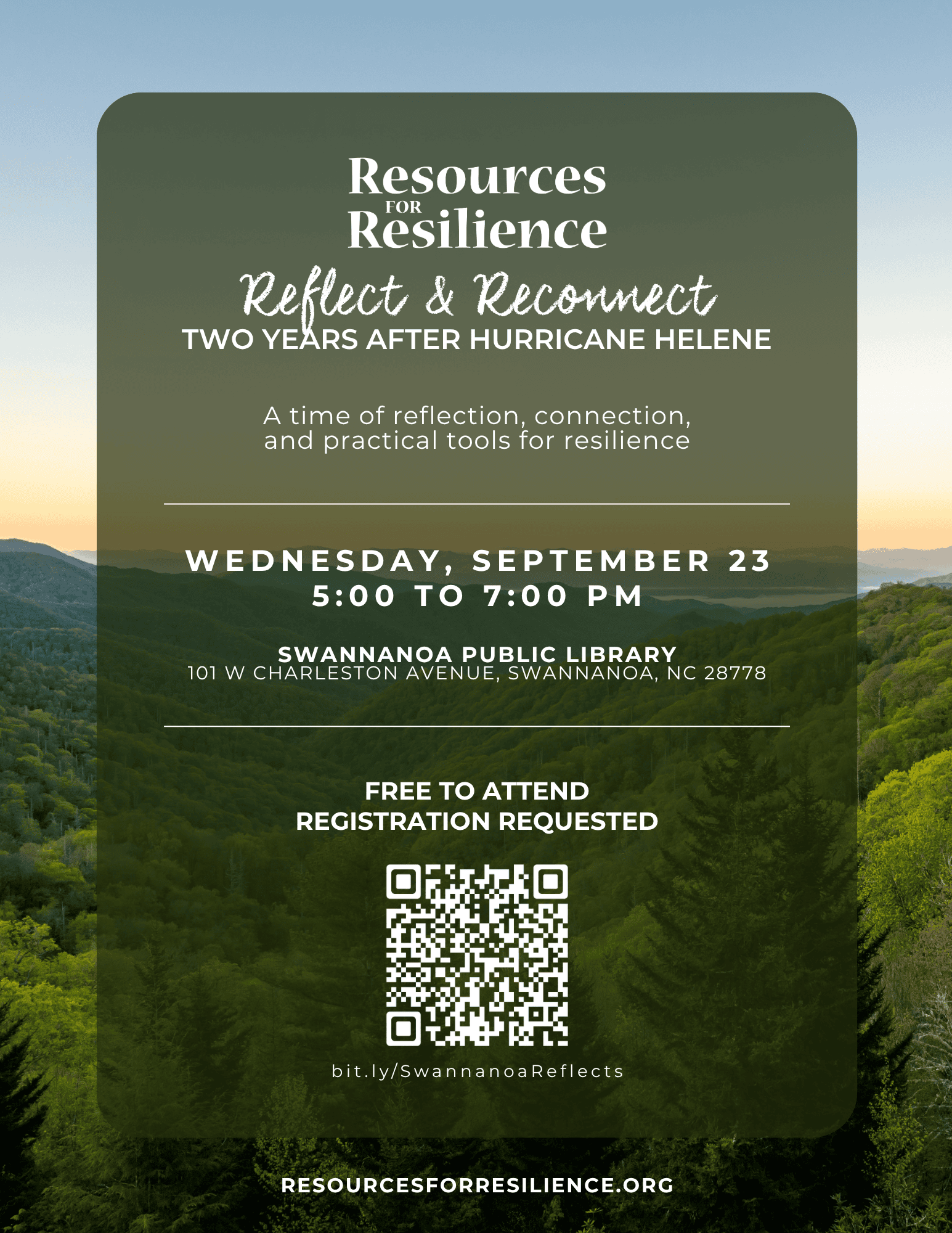
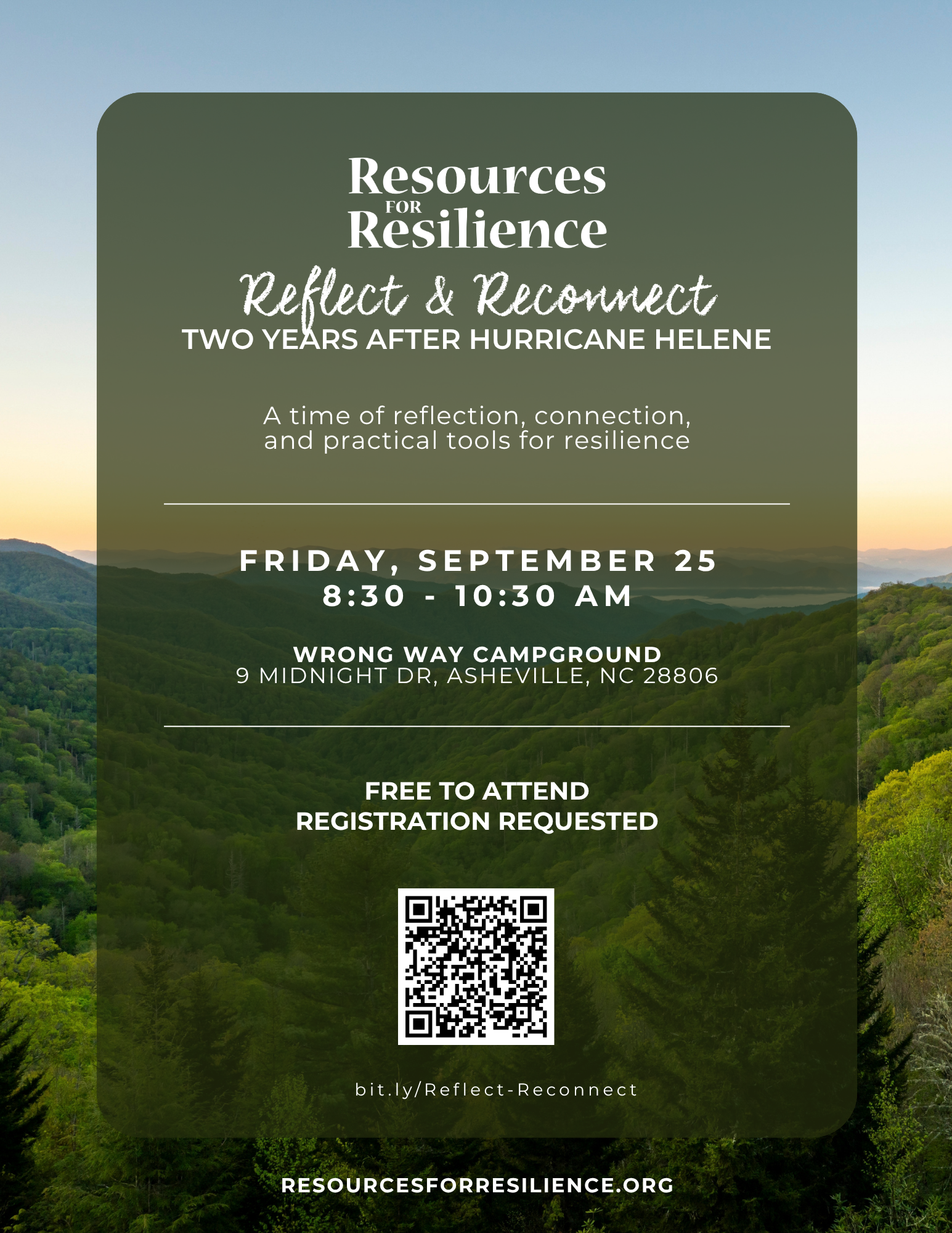
    These FREE two-hour ‘Reflect & Reconnect’ sessions blend our ‘Reconnecting Through Hard Times’ curriculum with our Community Listening Circles to create a powerful experience that can help foster understanding, hope and nervous system regulation as participants navigate the varying healing and recovery journeys and complex emotions surrounding the storm.


    September 23, 2026 | 5-7 pm | Swannanoa Public Library

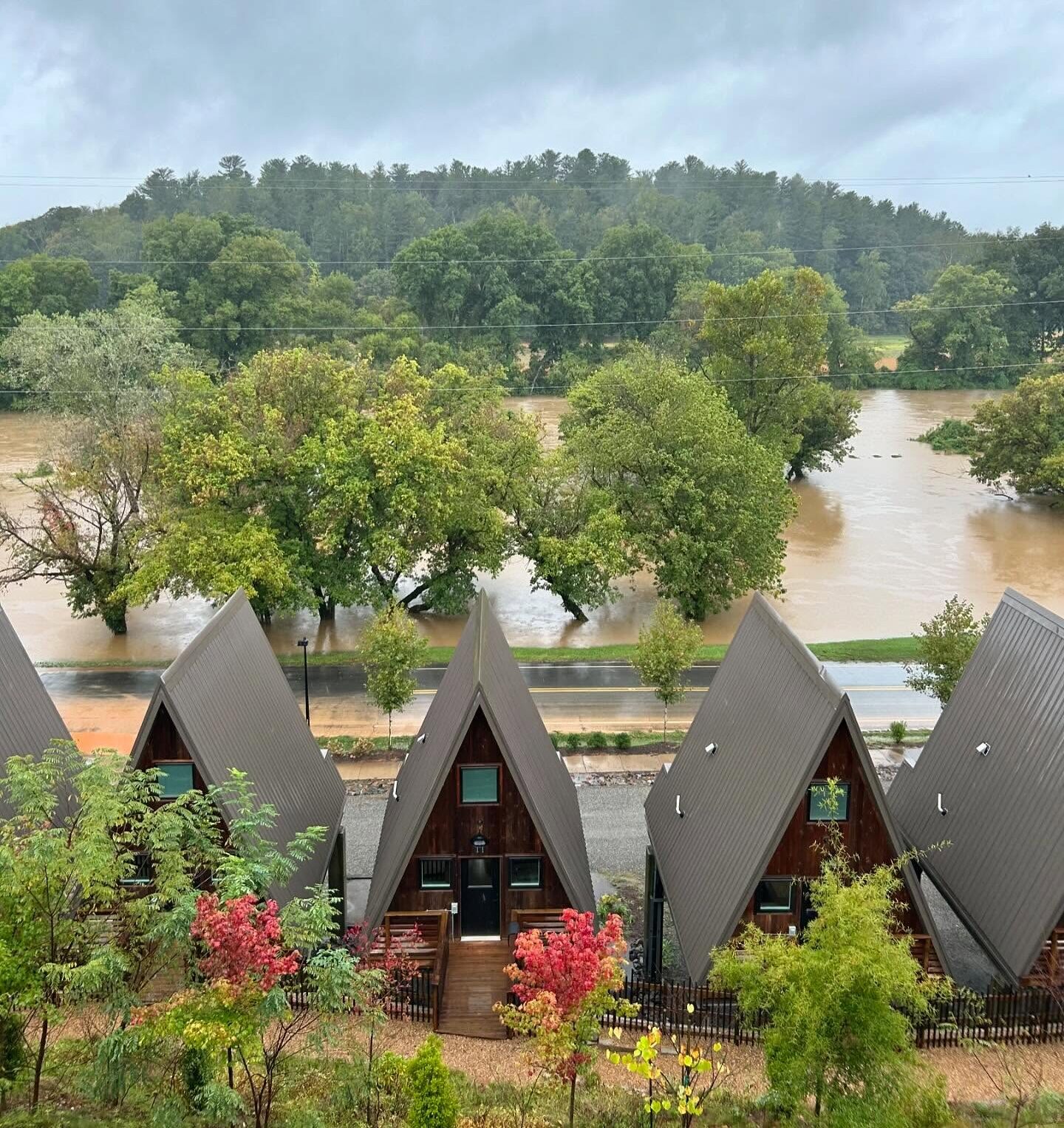
    Along the banks of the Swannanoa River, the town of Swannanoa was one of the hardest-hit areas in Western NC, experiencing catastrophic flooding that destroyed countless homes, businesses, bridges, and infrastructure.

    September 25, 2026 | 8:30-10:30 am | Wrong Way Campground

    Wrong Way Campground also experienced flooding to their property, although thanks to intentional flood-resilient design, their lodge and cabins survived the French Broad River cresting over 24 feet. Learn more about Wrong Way’s compelling journey to recovery after Helene.

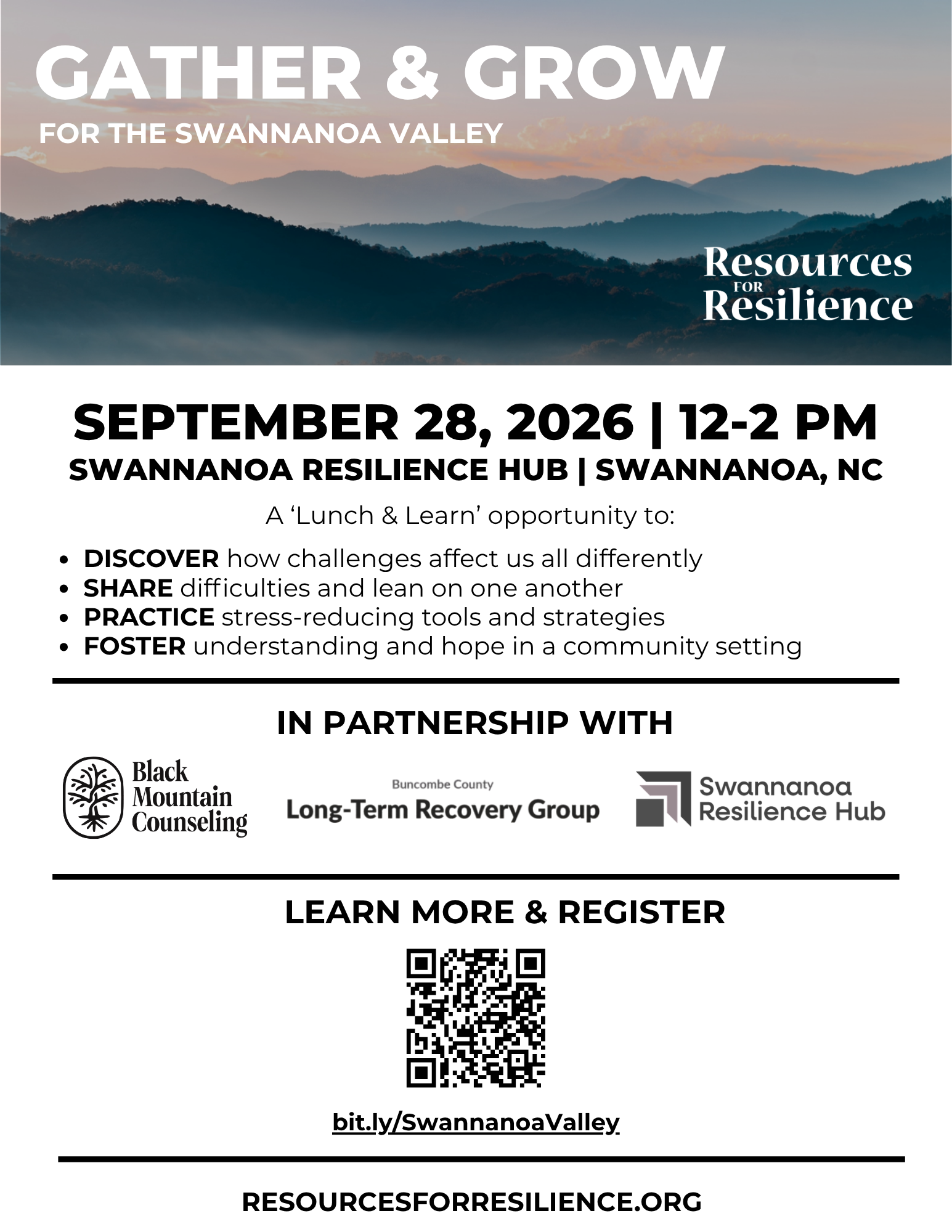
    Other FREE educational events to support Helene-impacted communities:

    Space is limited for these community events, so participants are encouraged to register early to secure a spot.

    Visit our online event calendar to learn more about our others upcoming trainings, workshops, and community gatherings.

    As we remember Hurricane Helene, let us also remember how our communities came together. Let us honor the kindness that emerged in the midst of hardship and the resilience that continues to carry us forward.


    Still WNC Strong


    Two years later, we continue to be inspired by the countless people who helped carry our communities through the hardest days:

    • The first responders who answered urgent calls.
    • The healthcare workers who cared for those in need.
    • The educators who supported children amidst uncertainty.
    • The utility crews, public servants, nonprofit leaders, behavioral health providers, faith communities, volunteers, and neighbors who showed up day after day.

    THANK YOU to these heroes and helpers whose compassion, courage, and commitment helped light the way forward. Your legacy of service and the countless stories of neighbors helping neighbors continue to define our region today.

    Resources for Resilience remains committed to supporting communities as they navigate the ongoing impacts of disaster, stress, and trauma.

    Over the past two years, Western North Carolina has demonstrated something remarkable, through the reconstruction and recovery process.

    We have become stronger together. We have learned to appreciate things we once took for granted. Most importantly, we have witnessed the extraordinary power of human connection.

    The road ahead is still long, but the spirit of Appalachia remains steadfast—rooted in grit, resilience, determination, generosity, and hope.

    May we never forget our capacity to rebuild, regenerate, heal, and grow.

    Yesterday, today, and tomorrow, we remain #WNCStrong.


    Additional Resources

    Project Wrap-Up: A Look Back at the GROW-NC Partnership

    Project Wrap-Up: A Look Back at the GROW-NC Partnership

    A Year of Community Recovery, Resilience, and Impact

    When Hurricane Helene struck Western North Carolina in the fall of 2024, it changed our communities overnight. Homes and businesses were damaged, schools and workplaces were disrupted, and many people faced uncertainty, loss, and overwhelming stress.

    While rebuilding infrastructure would take time, another need quickly became clear: people needed practical tools to navigate challenges, reconnect with one another, and begin healing.

    At Resources for Resilience, we knew recovery would require more than an immediate response. It would take a long-term commitment to supporting individuals, families, organizations, and communities as they rebuilt together.

    Thanks to an extraordinary $2 million partnership with the North Carolina Department of Health and Human Services, Vaya Health, the WNC Recovery Office, and countless community partners, that vision became reality through the GROW NC Project.

    As this regional initiative wraps up, we’re taking a look back at all of the focused care and connection that helped thousands of people discover that healing is possible.


    An Unprecedented Year of Community Impact

    From June 2025 through June 2026, the GROW NC Project achieved a huge amount of impact in a short amount of time.

    • DELIVERED 23 hours of direct crisis support in the wake of the storm
    • DOUBLED the size of our team with 7 new staff and over 40 event-support volunteers
    • HOSTED 350 specialized trainings, workshops, and events
    • ADMINISTERED nearly 700 hours of FREE trauma-informed programming, in person and online
    • SUPPORTED over 6,000 participants across 25 Helene-impacted counties
    • CERTIFIED 10 new Resilency Ambassadors to serve across their professional networks in WNC
    • LAUNCHED 3 new trauma-informed offerings for our key audiences
    • WELCOMED around 55 resilency partners and special guests to our inaugural professional development conference
    • FEATURED in over 50 different media sites, including local press and national media channels
    • OFFERED 35 opportunities for affordable CEU credits in collaboration with Area L-AHEC
    • COMPLETED onboarding training and quality support for 81 new and existing trainers
    • PROVIDED over 300 hours of technical assistance and support to our certified trainers
    • EXPANDED visibility resulting in over 1300 new email subscribers and social media followers
    • OBSERVED over 26,000 new visitors to our updated website, resourcesforresilience.org


    Growing Our Capacity To Serve

    This work would not have been possible without strengthening our own organizational capacity. GROW NC Project funding enabled Resources for Resilience to expand our team, deepen regional partnerships, increase outreach efforts, and respond more effectively to community needs. This growth allowed us to serve more people than ever before while maintaining the relationship-centered approach that has defined our organization since our founding

    Perhaps most remarkably, nearly 30% of our organization’s total growth over the past eight years occurred in the 18 months following Hurricane Helene.

    The message is clear: when communities face hardship, they seek connection, support, and tools for healing. Time and again, people have turned to Resources for Resilience during moments of crisis—and that’s where we will continue to show up when it matters most.

    This growth reflects both the tremendous need across our region and the power of making resilience education accessible to everyone.


    Meeting The Moment

    Within days of Hurricane Helene’s landfall, our team mobilized to provide crisis support in shelters, distribution centers, and community hubs across Western North Carolina.

    As recovery needs grew, so did our response. What began as emergency support quickly evolved into one of the largest resilience education efforts in our history, bringing trauma-informed programming directly to schools, healthcare systems, nonprofits, workplaces, and community spaces while expanding virtual access across the region.

    Recognizing that recovery would take many months—and in fact, years—we remained committed to providing practical tools and compassionate support wherever they were needed most.

    Flexibility was one of the project’s greatest strengths.

    Approximately half of all programming was delivered in person throughout mountain towns and rural communities most affected by Hurricane Helene. The remainder was offered virtually, allowing participants to access support from home, work, or wherever they felt most comfortable.

    This hybrid approach enabled us to serve educators, healthcare workers, behavioral health providers, nonprofit staff, volunteers, caregivers, families, and community members across all 25 impacted counties.

    No matter where someone lived—or what challenges they faced—they had access to practical, science-based tools for managing stress and building resilience.


    Helping the Helpers

    Throughout the project, one priority remained constant: supporting the people who spend every day supporting others.

    Programs were intentionally designed for those experiencing high levels of stress and burnout, including:

    • First responders
    • Educators
    • Healthcare professionals
    • Behavioral health providers
    • Nonprofit staff
    • Volunteers
    • Community leaders
    • Caregivers

    By helping these professionals strengthen their own resilience, we amplified the ripple effect of healing throughout the communities they serve.


    Programs Created for Recovery

    As we listened to participants throughout the recovery process, new needs emerged. In response, our team developed several original programs specifically designed to support post-disaster healing.

    • Reconnecting Through Hard Times: A one-hour training to equip community members with practical tools for supporting others through stress, uncertainty, and overwhelm.
    • Resilient Family Adventure: This innovative, interactive experience combines resilience practices with hands-on, nature-based activities, helping children and caregivers reconnect through movement, joy, and shared learning.
    • Recharging Resilience: Designed for frontline helpers, healthcare professionals, nonprofit staff, and service providers, this one-day workshop focuses on burnout prevention, nervous system regulation, and sustainable self-care.

    Together, these programs expanded our ability to meet emerging community needs while creating lasting resources for future disaster recovery efforts.


    Real Stories. Real Healing.

    While numbers and data tell part of the story, participant voices tell the rest.

    Throughout the project, individuals shared how these programs transformed not only their understanding of stress, but also how they cared for themselves, their families, coworkers, students, clients, and neighbors.”

    “Thank you for the important work you are all doing! I have felt forgotten since the storm. And I get it. There’s so many others in crisis. But we’re still trying to recover. The recognition of this was so important to me. This affects all of us. For years to come. And it will keep happening. And being in the room with others going though it who believe differently or vote for different people was powerful. This doesn’t happen a lot. We can heal together and we have tools to do it. I think that people that live in bigger cities think other people have heard of this or have some kind of access to this information. We do not. It is new for us. Thank you. Keep it up!  (Recharging Resilience Participant)

    “The trainers created a space where it felt comfortable to share, to feel, to check in with myself and how I’m feeling w/o the pressure i put on myself to put that stuff away.” (Reconnect for Resilience Participant)

    “I left feeling seen, heard, and taken care of. I felt happy and energized from engaging and practicing the tools rather than many workshops and trainings have you feeling dumped on, drained, and depleted. ” (Leading Through Hard Times Participant)

    “The training was a wonderful and calm experience, especially after a community tragedy. We are helpers and don’t have access to these (tools and resources). How does that make sense? I wish there was more (support) for helpers.” (Recharging Participant)

    “There have been so many tragedies in our community and it feels like people do something for a second and then move on. But offering these tools was like I could face another day helping others. I wish more people saw that we need help too. Thank you from the bottom of my heart.” (Recharging Participant)

    Each of these stories remind us that resilience is not about avoiding hardship. It’s about creating spaces where people feel connected, supported, and equipped with practical tools they can carry into everyday life.


    Growing Beyond Western North Carolina

    While RFR has been doing this work since 2017, the growth and visibility we’ve received post-storm has helped even more people learn about our mission, discover our programming, and understand why community-based mental health support matters.

    During this project, Resources for Resilience was featured by numerous local and national media outlets—including CNN, NPR, FEMA, FOX, WLOS, and many others—for our trauma-informed approach to disaster recovery.

    We are grateful to all of these media partners for helping us tell our story so that we can continue to sustain this work for years to come.

    This recognition helped elevate the importance of resilience education across the nation, and positioned Western North Carolina as a model for community-centered recovery.

    Disaster recovery is never measured in weeks or months. It is measured in relationships—communities that continue showing up for one another, individuals who discover the strength to keep moving forward, and countless examples of neighbors helping neighbors and remembering they are not alone.

    Looking Ahead

    While Resources For Resilience’s funding from the GROW NC Project has come to an end, our mission continues.

    As we transition back to a sustainable model supported by grants, partnerships, contracts, and affordable program registration fees, we remain committed to making resilience education accessible to all.

    To the GROW NC Office, NCDHHS, Vaya Health, as well as every participant, volunteer, partner organization, funder, and supporter who believed in this work: THANK YOU!

    You made this level of regional impact possible. Together, we have helped build stronger, healthier, and more resilient WNC, and we look forward to continuing this work for years to come.


    “For me, this has been one of the most unforgettable years in RFR’s story. And probably in my own life. 

    I still remember the email that came through on March 27, 2025. It shared that $2 million had been allocated from the Governor’s Recovery Office of WNC for Resources for Resilience to offer our programming and outreach across the region. 

    By April 10, just eight working days later, we had a project proposal out the door. Eight days to meet, to dream, to build something meaningful with a focus on supporting the helpers of Western North Carolina.

    We put our vision together, crossing our fingers and toes that it could work. We knew we needed to double our team size and take an approach we had never taken before. 

    I remember thinking early on, “How are we ever going to pull this off?” Then a few months in it had shifted to, “Are we actually going to pull this off?” And then eventually… “Oh my gosh, yes! we are pullingt his off andin the best way possible!”

    And the truth is, this only happened because of every single person on this team. 

    We rode the waves together, and we were never alone in it. We showed up for each other. We listened. We made space for the hard moments with compassion. And we celebrated, again and again, the big wins and the small ones too. We truly walked the walk of our RFR tools.

    Every mile traveled, call made, meeting attended, trainer supported, receipt submitted, huddle held, materials counted. Every community conversation, every social post, every calendar entry, each effort small and large.

    All of it mattered. All of it made this project possible. 

    We may not know exactly what the future will look like exactly. But we do know this: we were part of something big. Something meaningful. And we did it, together.

    And that doesn’t just end here. We carry this with us, the impact, the connection, the growth, the exhaustion, and the exhilaration. We carry it as part of who we are now, and as part of this RFR community that continues forward.”

    Ashley Putnam, Director of Partnerships & Programming

    Building Resilient Families with the WNC Bridge Foundation

    Building Resilient Families with the WNC Bridge Foundation

    Resources for Resilience Awarded IMPACT Grant to Expand Family Programming Across Western North Carolina

    Resources For Resilience is excited to announce that we have been awarded an IMPACT Grant from the WNC Bridge Foundation to expand our  family-centered programming designed to help children and caregivers build resilience together.

    Families throughout our region continue to navigate the lasting effects of Hurricane Helene. While many immediate needs have been addressed, the long-term impacts of stress, disrupted routines, financial strain, and caregiver burnout remain. This funding allows us to respond to those ongoing challenges by bringing practical, prevention-focused mental wellness resources directly into communities where they are needed most.

    Since Hurricane Helene, Resources for Resilience has provided resilience education to thousands of caregivers, educators, healthcare professionals, first responders, and community members across Western North Carolina. That work revealed a growing need for family-centered, preventive mental health support—especially in rural communities where access to services can be limited.  RFR’s youth and family-focused programming was created in direct response to those conversations.

    “Even the most resilient families can benefit from accessible tools, supportive relationships, and chances to reconnect and reset. This investment from WNC Bridge Foundation allows us to bring those opportunities to more communities and help families build skills they can use every day.”

    Ann DuPre Rogers, RFR Executive Director

    Community-Based Experiential Events

    Through this grant, Resources For Resilience will host four (4) Resilient Family Adventures in rural and underserved communities between August 2026 and June 2027. Each event is designed to be welcoming, interactive, and accessible for families of all ages.

    During each Adventure, families participate in hands-on activities that teach practical resilience skills through movement, play, connection, and shared learning. Children and caregivers will explore simple strategies for managing stress, strengthening emotional regulation, and building healthy relationships—all grounded in neuroscience and presented in engaging, everyday language.

    Every event will also include a shared community meal, bilingual resources and support, take-home resilience toolkits, and opportunities to connect with local organizations.


    Valuable Educational Programming

    Alongside the in-person community RFA events, RFR will also host up to to six(6) Resilient Families programs to provide continuing education and reinforce skill-building.

    These FREE 1-hour presentations will be offered in both virtual and in-person formats for parents to learn how stress manifests in children and teens, discover how to spot problems early on, and explore simple tools to boost connection and support.

    Register for an upcoming date, and stay tuned for additional opportunities throughout the year:

    Strengthening Communities Together

    This generous grant will support an estimated 400–700 children and caregivers across WNC, while strengthening partnerships with schools, faith communities, parks, libraries, and local nonprofits throughout the region.

    By investing in prevention, connection, and practical resilience skills, the program aims to strengthen protective factors for children, increase caregiver confidence, and foster healthier, more connected communities.

    Resources for Resilience is deeply grateful to the WNC Bridge Foundation for its commitment to supporting children and families across Western North Carolina. Together, we are helping ensure that families not only recover—but continue to grow stronger, more connected, and more resilient for years to come.


    Stay tuned for upcoming RFA and RF dates by subscribing to our email newsletter, following us on our social channels,  or visiting our community events calendar.

    Event Recap: 2026 Resiliency Ambassador Certification

    Event Recap: 2026 Resiliency Ambassador Certification

    On June 12-13, 2026, a cohort of ten certified Resiliency Champions came together for Resources For Resilience inaugural Resiliency Ambassadors training— an immersive, hands‑on certification program designed to deepen skills, strengthen community, and expand the reach of trauma‑informed resilience education.

    Hosted at Focal Point Coworking in Asheville, the event brought together dedicated helpers from several Helene‑impacted communities. These professionals have already completed our signature Reconnect for Resilience and Resiliency Champions programs, and were hand-selected to be Resiliency Ambassadors through a thoughtful, competitive application process.

    This Ambassador cohort represents the final step in Resources For Resilience’s Resiliency Partners Pathway, which strives to strengthen invididuals capacity to navigate trauma, manage stress, and prevent burnout through trusted community leaders.

    Commitment to Community

    During this powerful two-day event, we prioritized collaboration, fun, and inclusivity- accomodating multiple learning preferences, and celebrating the unique strengths each Ambassador brings.

    Each participant was able to share why expanding resilience in their community matters, including how they’ve been using RFR’s tools at work and in life, and who they hope to serve next.

    At the end of the training, each Ambassador understood how to:

    • DELIVER RFR’s signature 1‑hour offering, Reconnect for Better Days
    • TEACH trauma‑informed content effectively using clear key messages and foundational neuroscience
    • INCORPORATE valuable new resources and training aids, such as Rapid Reset ‘trading cards’, quarterly gatherings, and monthly learning communities.
    • COMMUNICATE customized stories and examples for the groups they serve
    • DEVELOP teaching aids and practice presenting to a live audience
    • CONNECT deeply with the RFR mission and the statewide network of resilience educators
    • RECEIVE ongoing support and feedback from RFR staff and fellow Ambassadors

    Certified Ambassadors are commited to delivering four(4) Reconnect For Better Days sessions per year to the audiences they serve in our region. This includes survivors of domestic violence, people returning to community post‑incarceration, college students, youth and families, hospital staff, peer support specialists, and more.

    This important “train-the-trainer” event didn’t just build skills — it expanded our region’s capacity to regulate, heal, and support one another. These leaders will carry RFR’s tools and teachings into their own networks, thus multiplying resilience across the state.

    Congratulations Ambassadors! 

    On behalf of all of us here at Resources For Resilience, CONGRATS  to this new cohort of certified resiliency educators! Thank you for representing the teachings and values of RFR so well.

    We are so proud of you, and look forward to seeing how far this work will reach in the years to come. Your passion, authenticity, and lived experience will help bring resiliency education to places where it’s needed most. 

     Together we’re strengthening the foundations of communities across Western North Carolina, and beyond.

    “This was wonderful! I had a really fun time and learned a lot. The two days were very well delivered and curated. The team should be very proud!”

    “I’ve been hoping for this training since I met yall! So happy that it happened and that I was accepted!”

    “I am truly blessed to be able to work with you all. Thank you for teaching with your whole heart. I’m honored to be in the ranks with you all.”

    2026 Ambassadors

    This cohort of Ambassadors was sponsored through the GROW NC Project, a region-wide partnership with Vaya Health and NCDHHS.

    STAY CONNECTED with us online to learn when the next Ambassador training will be!