It’s hard to believe that two years have passed since Hurricane Helene changed Western North Carolina forever.
As September and October approach, communities across our mountain region find themselves reflecting on a date that now exists as a dividing line in memory: life before Helene, and life after.
For many residents, Helene was more than a storm. It was a moment of profound loss, uncertainty, and disruption. Homes were damaged or destroyed. Families were displaced. Beloved landscapes were altered. Lives, routines, and plans changed in ways that no one could have anticipated.
And yet, alongside the grief and devastation, Helene revealed something equally profound: the extraordinary strength, compassion, and resilience of Appalachian communities.
As we mark two years since Helene, we pause to remember what was lost, honor what has been rebuilt, and acknowledge the healing that is still unfolding.
“The anniversary of Helene hits us in the guts every year. A collective trauma cauterized into a tender corner of our hearts, the wound reopening like clockwork every September. Scab never fully healed.”
WNC Resident
“There’s lots of loss, lots of grief, lots of extreme stress, but also, so many stories of connection and love and neighbors helping neighbors and people coming to each other’s aid, and figuring it out together.”
Executive Director, Ann DuPre Rogers (Jan 2025)
Reflecting on the Last 24 Months
The aftermath of Helene brought challenges that many communities are still navigating today.
The storm left behind damaged infrastructure, interrupted livelihoods, environmental impacts, and deep emotional wounds. Recovery has required patience, persistence, and tremendous collective effort.
Across Western North Carolina, neighbors showed up for one another in countless ways—clearing debris, sharing supplies, repairing homes, offering childcare, and providing emotional support. These acts of care became more than moments of kindness; they formed the foundation of our region’s recovery.
Today, many signs of progress are visible. Roads have reopened. Homes have been repaired. Businesses have returned. Communities continue to adapt and rebuild.
Yet significant challenges remain.
Funding gaps continue to affect many rural areas throughout the 25 Helene-impacted counties. Environmental restoration efforts are ongoing. The economic impacts of the storm continue to unfold, and many families are still working toward stability and recovery.
Our work continues. And so does our HOPE!
Grief anniversaries can hit in unexpected ways. Your body and nervous system remember the emotional and physical experience of the past, and bring feelings of anxiety, sadness, anger, guilt, or numbness back to the surface. Whatever shows up, meet it with gentleness and compassion. It’s ok to not be ok.
Understanding the Lasting Impact of Trauma
While physical recovery is easier to see, emotional recovery often takes much longer.
One way to think about trauma is as experiencing “too much, too fast.”
In the case of Helene, few people could have anticipated the magnitude of what was coming. During a crisis, many of us instinctively enter survival mode. We compartmentalize emotions in order to make it through the immediate challenges before us.
That response can be incredibly effective in the short term.
But over time, emotions that are pushed aside can remain with us. Experiences and feelings may become stored in our bodies and nervous systems, sometimes resurfacing months—or even years—later.
The familiar fight, flight, or freeze responses that help us survive disasters can begin to affect our well-being when they persist for too long. The impacts may show up as anxiety, depression, exhaustion, headaches, sleep disruptions, high blood pressure, emotional distress, or a combination of physical and emotional symptoms.
Another common experience is survivor’s guilt, or what some describe as survivor’s grief. These feelings often arise from our deep capacity for connection and care. We carry one another’s stories, worry about our neighbors, and feel others’ pain alongside our own.
For many people across Western North Carolina, the anniversary of Helene may reactivate these emotional experiences.
That is completely normal. Trauma anniversaries can affect us in ways we do not always expect.
“I’ll never forget the Helene gratitude. I can let go of the grief, but the gratitude I hope that I’ll never forget. Every day is about experiencing more of the grateful part.”
Nicole K., WNC Resident
There Is No Right Way to Feel
The emotional aftermath of Helene continues to be deeply felt throughout our region.
Recovery is not only about rebuilding structures. It is about healing hearts, relationships, and communities.
Anniversary dates of traumatic events can stir powerful emotions. Some people may experience increased stress, anxiety, sadness, or irritability. Others may feel numb or disconnected. Some may find themselves avoiding reminders of the storm altogether.
All of these responses are valid. Each person’s healing journey is unique, and there is no single “right” way to navigate this milestone.
You may experience:
- Overwhelm
- Grief and sadness
- Numbness
- Avoidance
- Shock
- Reflection
- Gratitude
- A mixture of many emotions at once
Each person carries their experience differently.
As we move through the healing process, there will be days when sadness feels close to the surface. There may be moments of anger, fear, tenderness, or exhaustion. And there may also be moments of joy, gratitude, and connection.
Both can be true. We can honor loss while still recognizing growth, and we can remember what happened while still appreciating how far we’ve come.
The Grief, and the Gratitude
Two years later, we continue to be inspired by the countless people who helped carry our communities through the hardest days:
- The first responders who answered urgent calls.
- The healthcare workers who cared for those in need.
- The educators who supported children amidst uncertainty.
- The utility crews, public servants, nonprofit leaders, behavioral health providers, faith communities, volunteers, and neighbors who showed up day after day.
THANK YOU to these heroes and helpers whose compassion, courage, and commitment helped light the way forward. Your legacy of service and the countless stories of neighbors helping neighbors continue to define our region today.
Finding Ways to Remember & Heal
Many people benefit from creating intentional space around meaningful anniversaries.
That may look like:
- Cooking or baking a favorite meal
- Volunteering in your community
- Attending a local commemorative event
- Spending time in nature
- Practicing meditation or reflection
- Participating in a support group
- Attending an educational workshop or training
- Connecting with family, friends, or neighbors
- Participating in a healing retreat
- Creating new rituals and traditions of remembrance
There is room for every person in Western North Carolina to grieve, process, connect, and heal in ways that feel meaningful to them. As we approach Helene’s second anniversary, may you find ways to honor this time that feel authentic and supportive for you.
Resources for Resilience remains committed to supporting communities as they navigate the ongoing impacts of disaster, stress, and trauma. We are proud to offer community-centered programming designed to provide connection, practical tools, research-backed resources, and opportunities for reflection and healing.
While our programming is not a replacement for professional mental health treatment, they are especially helpful for those serving on the frontlines of community well-being, including first responders, behavioral health professionals, educators, public officials and civil servants, healthcare workers, community volunteers, and any other professionals dedicated to keeping our communities safe, informed, healthy, and connected.
2026 Helene-Anniversary Programming
Resources For Resilience continues to hold space for the many emotions WNC residents may be experiencing by offering judgement-free, trauma-informed opportunities to learn, reset, and reflect together.
These FREE two-hour ‘Reflect & Reconnect’ sessions blend our ‘Reconnecting Through Hard Times’ curriculum with our Community Listening Circles to create a powerful experience that can help foster understanding, hope and nervous system regulation as participants navigate the varying healing and recovery journeys and complex emotions surrounding the storm.
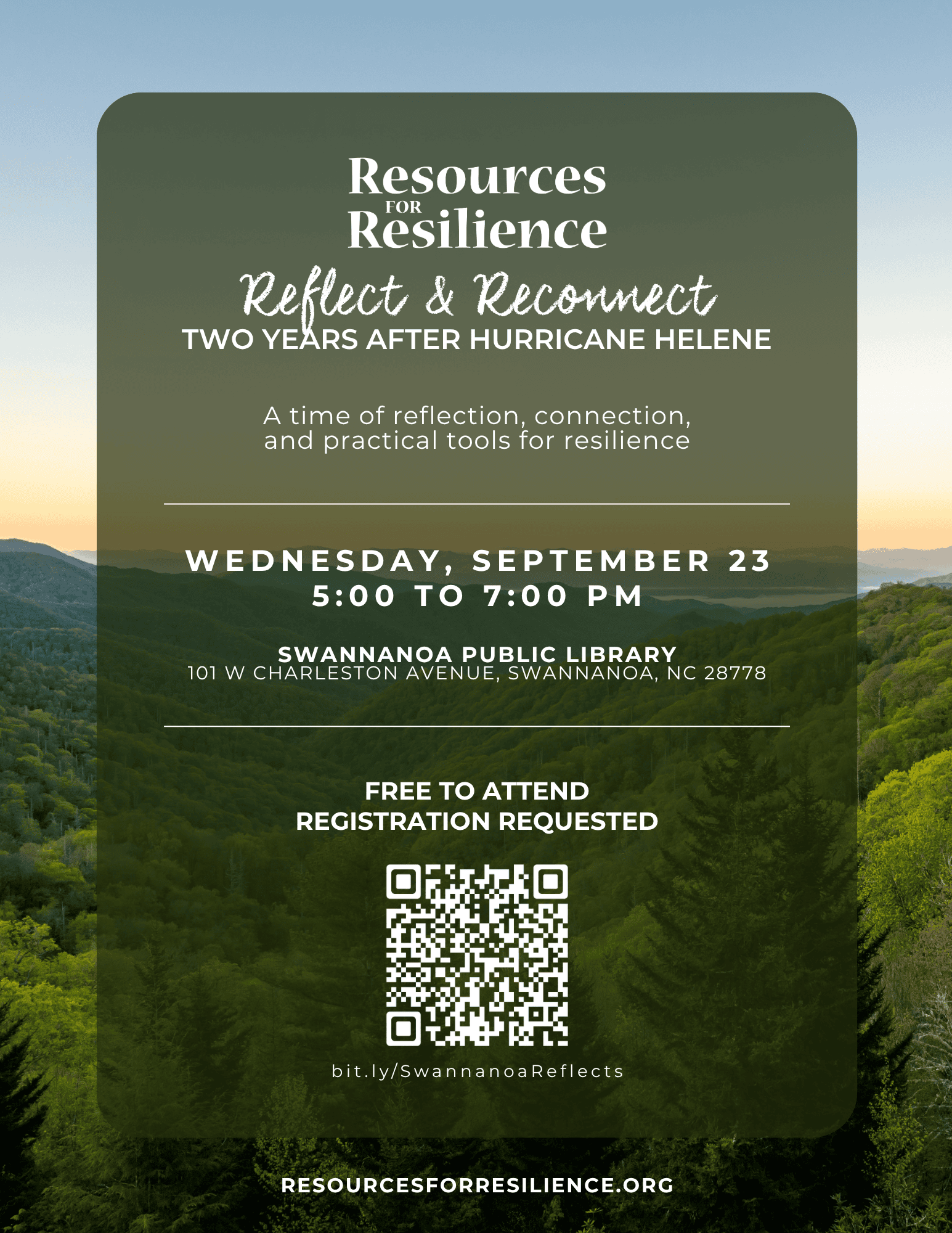
September 23, 2026 | 5-7 pm | Swannanoa Public Library
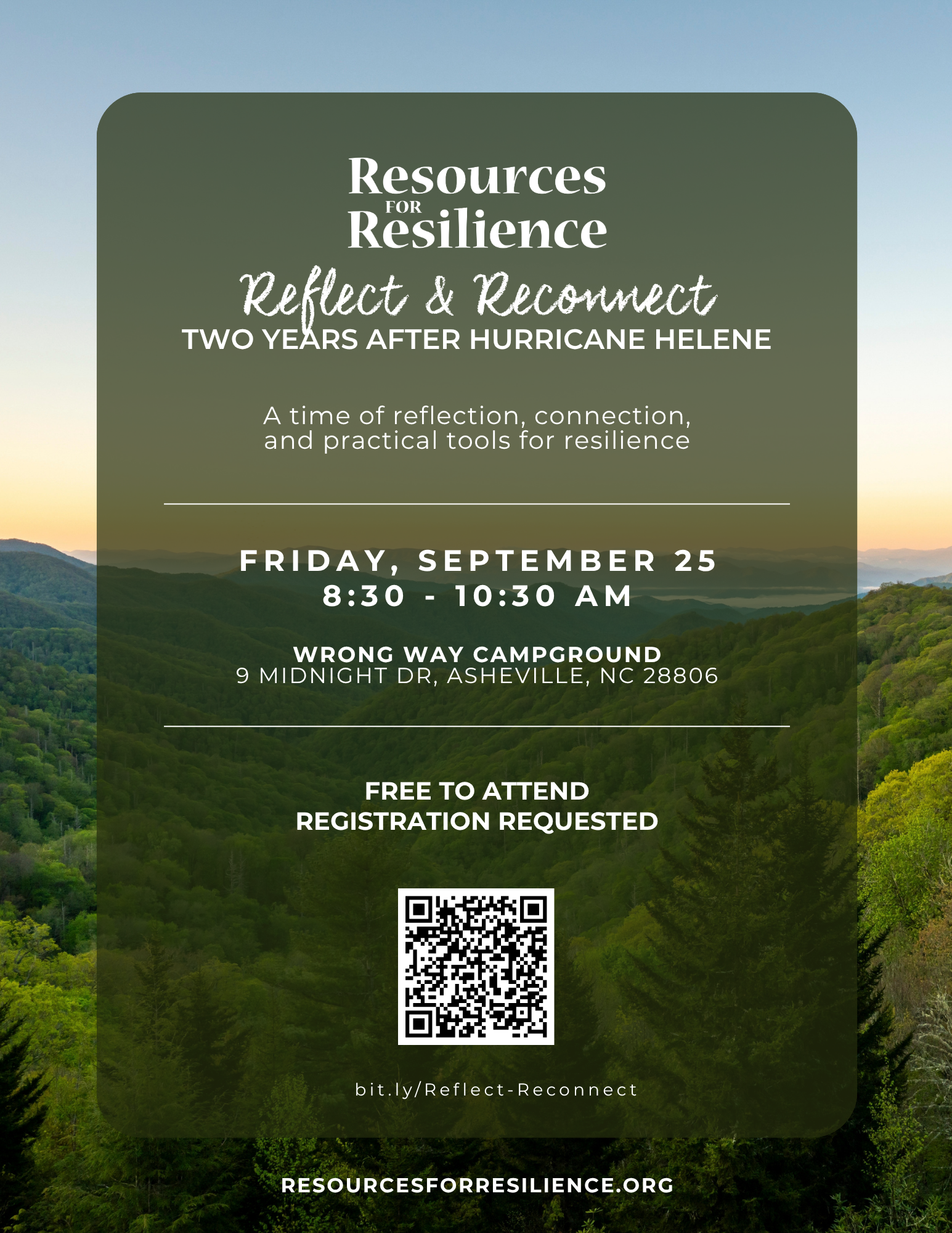
September 25, 2026 | 8:30-10:30 am | Wrong Way Campground
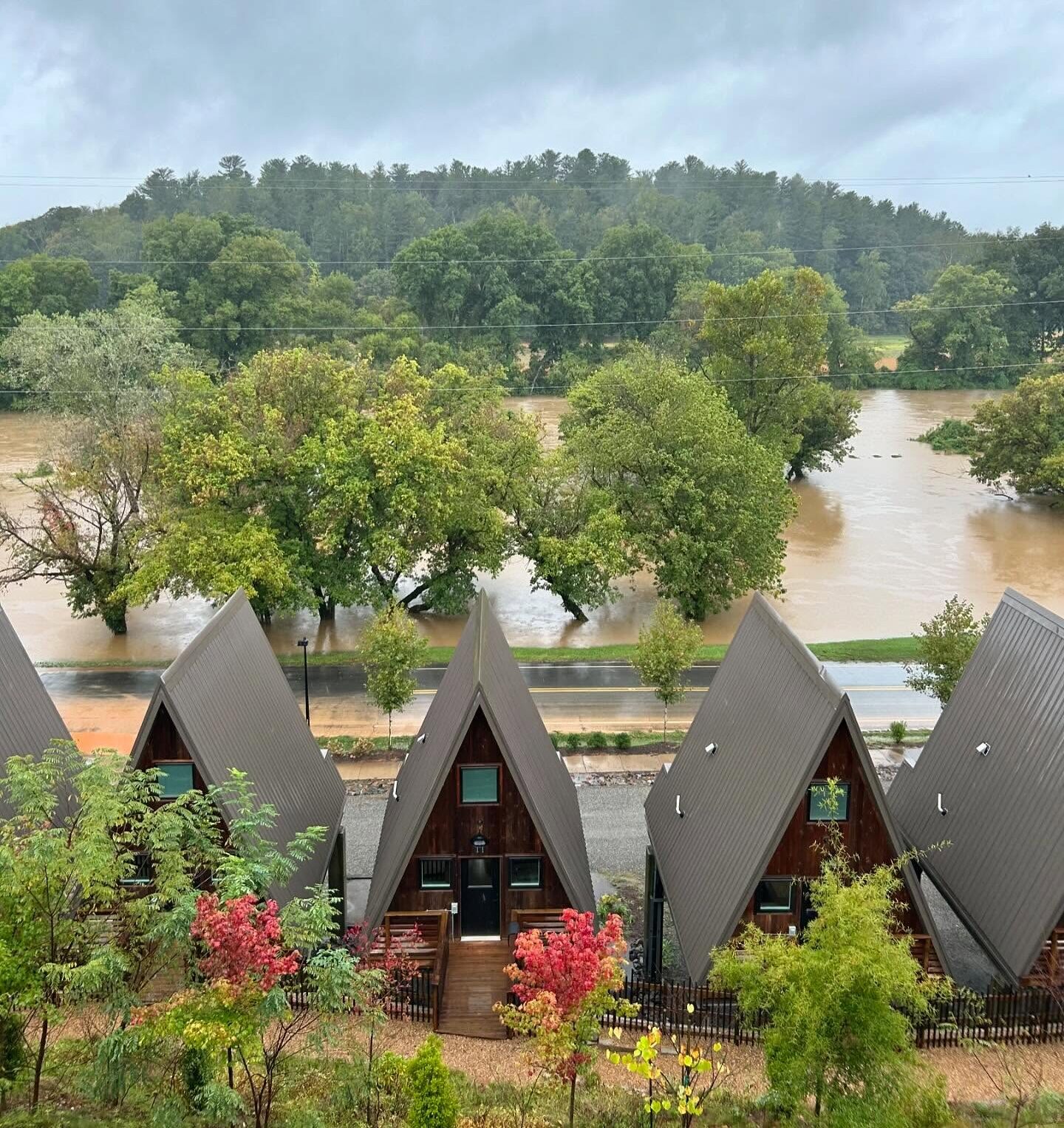
Wrong Way Campground also experienced flooding to their property, although thanks to intentional flood-resilient design, their lodge and cabins survived the French Broad River cresting over 24 feet and they were able to recover quickly. This special session will include a brief art therapy activity led by local community arts nonprofit, Turning The Page on Helene.
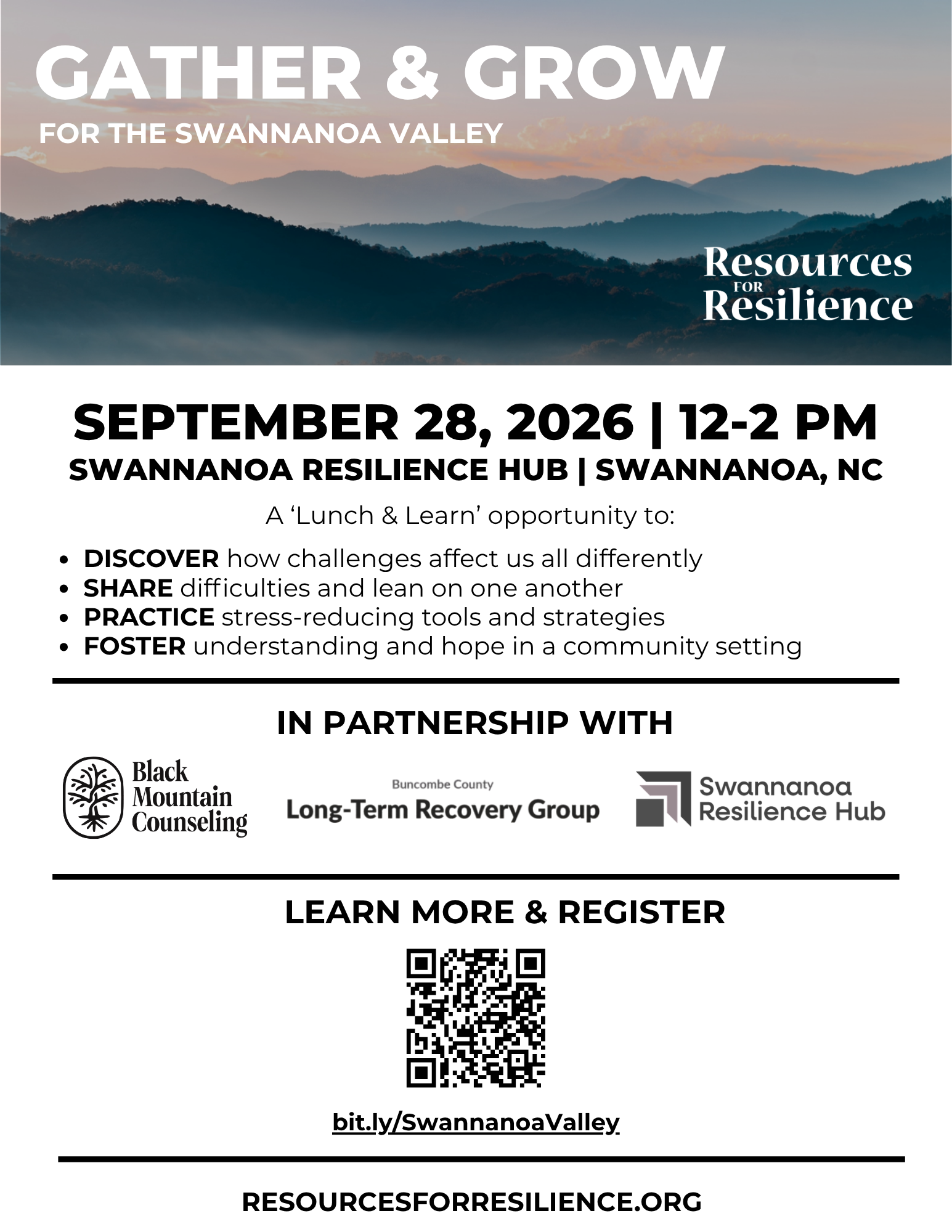
September 28, 2026 | 12-2pm | Swannanoa Resilience Hub
In this special ‘Lunch & Learn’ session sponsored by Black Mountain Counseling and Buncombe County Long-term Recovery Group, participants will have a final opportunity to learn, reflect and connect in a supportive community setting.
Other FREE educational events to support Helene-impacted communities:
- Leading Through Hard Times: Spindale/Rutherford County, NC (9/21)
- Resilient Families: Virtual 9/24, 1/28, 5/25
- Recharging Resilience: Spindale/Rutherford County, NC (10/21)
Visit our online event calendar to learn more about our others upcoming trainings, workshops, and community gatherings.
As we remember Hurricane Helene, let us also remember how our communities came together. Let us honor the kindness that emerged in the midst of hardship and the resilience that continues to carry us forward.
Still WNC Strong
Two years later, we continue to be inspired by the countless people who helped carry our communities through the hardest days:
- The first responders who answered urgent calls.
- The healthcare workers who cared for those in need.
- The educators who supported children amidst uncertainty.
- The utility crews, public servants, nonprofit leaders, behavioral health providers, faith communities, volunteers, and neighbors who showed up day after day.
THANK YOU to these heroes and helpers whose compassion, courage, and commitment helped light the way forward. Your legacy of service and the countless stories of neighbors helping neighbors continue to define our region today.
Resources for Resilience remains committed to supporting communities as they navigate the ongoing impacts of disaster, stress, and trauma.
Over the past two years, Western North Carolina has demonstrated something remarkable, through the reconstruction and recovery process.
We have become stronger together. We have learned to appreciate things we once took for granted. Most importantly, we have witnessed the extraordinary power of human connection.
The road ahead is still long, but the spirit of Appalachia remains steadfast—rooted in grit, resilience, determination, generosity, and hope.
May we never forget our capacity to rebuild, regenerate, heal, and grow.
Yesterday, today, and tomorrow, we remain #WNCStrong.
Additional Resources
- LOOK back at our reflection from Helene’s one-year anniversary.
- ATTEND an upcoming trainings, workshops, or community event
- LEARN more about weather-related trauma and stress
- ACCESS immediate mental health support and additional recovery resources.
- CONNET through our email or social channels to stay in-the-know