Scared, But Not Alone: Helping Kids Feel Safe & Connected During Extreme Weather Events

Parents and caregivers play a powerful role in shaping how children experience stressful or unpredictable weather events like hurricanes, flooding, wildfires, or other natural disasters.

When adults stay grounded and regulated, kids naturally take their cues from that steadiness. Even in moments of uncertainty, simple, consistent tools can help families feel more connected and secure.


Mental Health Practices for Parents & Children

The programming of Resources For Resilience teaches several practices that parents can use with children when storms stir up fear, memories, or anxiety. Practicing these tools regularly — not just during storms — helps build resilience over time. Kids learn that even when the weather is unpredictable, they have ways to feel safe, supported, and confident navigating whatever comes next.

Use Rapid Resets Together

Gentle tapping, humming, or taking a sip of water can help settle the nervous system. When kids see a calm adult using a Rapid Reset, the tool becomes even more effective. Kids need small moments of relief — play, laughter, and breaks from the heaviness help their bodies and minds recover.

Help Them Sense In

Curiosity goes a long way. This pulls their attention out of fear and back into the present, where their body can begin to settle. In particular, we want them to notice what feels good, comfortable, or even just neutral. Our nervous systems are already masterful at noticing sensations of discomfort or pain for survival reasons, but we want to help them shift the focus to the positive.

Recall A Comforting Memory

Invite kids to think about a favorite place, person, or moment. Remembered safety helps the brain shift out of a stress state and back toward calm.

Look For The Helpers

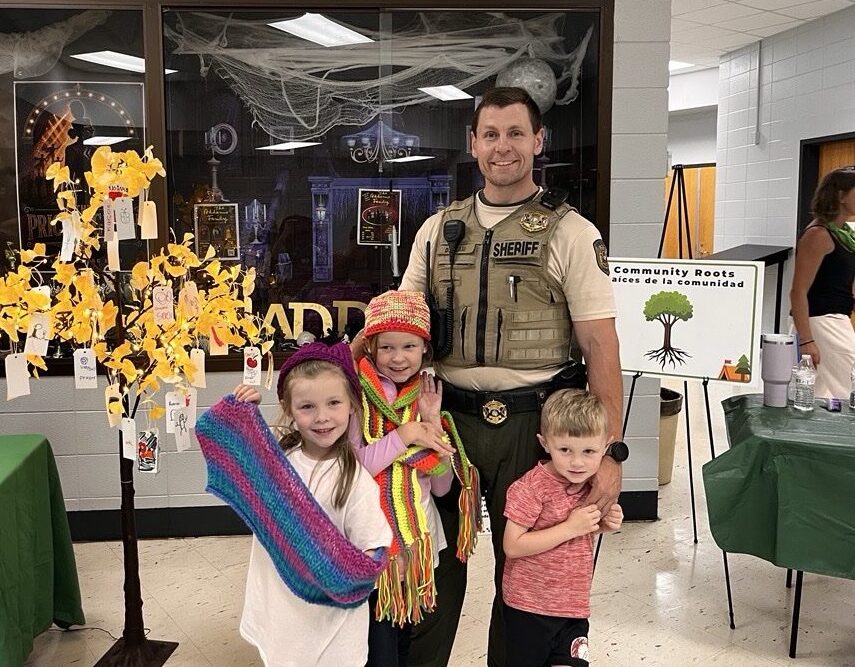
Pointing out neighbors, responders, or community members who are helping interrupts the brain’s threat response. Noticing safety and support in the environment helps the body relax.

Stay Connected

A calm voice, a cuddle, reading together, or a quick check-in can regulate a child’s nervous system faster than anything else. Connection is one of the most powerful antidotes to fear.

Normalize Their Feelings

Let kids know their reactions make sense. Reassurance helps them feel understood and supported. Phrases like these can help:

    • “I understand why you are afraid. I’m here with you.”
    • “Yes, this is scary. Helene was scary, too — and do you remember how we got through it? We’re even stronger now.”
    • “Everyone feels scared sometimes, and that’s okay. Our bodies are doing their job.”
    • “We’re paying attention. We’re ready to handle whatever comes our way.”
    • “That was really scary.  You were scared, and I was scared, and many of our neighbors were too.”
    • “Thankfully our nervous systems are keeping us safe.”

Process Together

Parents can’t prevent every hard moment for their children, but they can help kids by staying present with them and asking them simple questions about what they feel or need. Being open and honest in an age-appropriate way matters more than trying to shield them. They’re going to see and hear things, and what helps most is talking afterward and making sense of it together. Reminder: It’s normal for kids to want to retell stories over and over. While it may feel repetitive to you, know that it’s part of how they’re “metabolizing’ and making sense of things.

Practice Self-Compassion

Just like our children, most parents are learning as they go, and that’s completely okay. If we’ve never even been through something before, of course we won’t know how to do it perfectly. Every family will move through hard times differently, so giving grace and patience is important.

Limit Media Consumption

After a storm, or any weather disaster is a good time for everyone to unplug and spend time together with friends and family. If children are exposed to media about the event, view it with them and offer reassuring explanations and answer any questions. It’s important not to not provide too many details or share graphic images or emotional coverage.

Age-Appropriate Responses

Young children often look to adults for cues on how to respond to stressful events, while teens will have other unique needs and coping styles. Understanding these processing and developmental differences helps ensure everyone receives the support they need to heal, adapt, and recover.

  • Ages 0-5:
    • Provide comfort, routines, and reassurance that trusted adults are keeping them safe.
    • Use simple, honest language and answer questions briefly.
    • Encourage play, drawing, or storytelling to express feelings.
  • Ages 6-12:
    • Invite them to talk about what happened and how they feel.
    • Correct misconceptions and provide age-appropriate facts.
    • Maintain routines when possible and involve them in recovery activities.
    • Watch for changes in behavior, sleep, appetite, or school performance.
  • Ages 3-18:
    • Acknowledge their emotions and give them opportunities to discuss concerns.
    • Encourage healthy coping strategies such as exercise, creative outlets, and peer support.
    • Involve them in preparedness and community recovery efforts to build a sense of control.
    • Monitor for signs of prolonged anxiety, depression, or risky behaviors.
Regardless of the age of the child, you can support them by Listening without judgment, validating feelings, providing accurate information, maintaining routines and normalcy whenever possible.


Wrapping It Up

Extreme weather can shake a family’s sense of safety, but no one has to navigate it alone. Resources For Resilience™ offers simple, practical tools that help parents and youth stay grounded and supported through fear, uncertainty, and recovery.

If you’re looking for ways to strengthen your family’s resilience — before, during, or after a storm — we’re here to help.

Explore our family‑focused workshops and our community trainings, and walk away with easy‑to‑use practices designed to restore calm and clarity for people of all ages. Together, we can help your family feel more prepared, more supported, and more confident facing whatever comes next.

The good news? Kids are resilient. However, it’s also not that simple. In situations that feel out of our control, it’s important to remember that children take their cues from adults. We hold so much influence in a child’s ability to regulate and bounce back.


Additional Resources

‘Storm on Sesame Street’ episode | PBS KIDS

Hurricanes & Floods: Taking Care of Your Children and Yourself | HealthyChildren.org

College Students Coping After the Hurricane | The National Child Traumatic Stress Network

Immediate Mental Health Support Resources


RELATED POSTS

When The Storm Doesn’t End: Understanding Weather-Related Trauma

When The Storm Doesn’t End: Understanding Weather-Related Trauma

For a long time, trauma had a different name. It was once called shell shock, a term used to describe soldiers who returned from war changed by what they had seen and survived. Today, we understand this experience more clearly as Post-traumatic Stress Disorder...

Stronger Than The Storm: An Ode to WNC’s First Responders

Stronger Than The Storm: An Ode to WNC’s First Responders

During Hurricane Helene, first responders played a critical role in Western North Carolina by conducting rescues, providing emergency aid, and helping countless communities recover from widespread devastation. The response to this disaster showcased the unwavering...

Hitting “Close To Home”: How to Cope With The Emotions of Extreme Weather, Especially If You’ve Lived It Before

As survivors of Hurricane Helene will tell you, past trauma has a way of “compressing time.” Extreme weather can stir up more than logistical stress — for many people, it brings back memories of past storms, evacuations, losses, or long recoveries.

When something was overwhelming the first time, reminders can collapse the distance between “then” and “now.” A person may know they’re safe, but their body may still shift into survival mode — faster heart rate, shallow breathing, irritability, trouble sleeping, or a sense of dread.

Even when we’re physically safe, our bodies may react as if danger is already here. That response is normal. It’s human. And it makes sense.

Why Extreme Weather Can Feel So Intense

For anyone who has lived through a natural disaster such as a hurricane, flood, wildfire, earthquake, or prolonged power outage, the body remembers. The amygdala — the brain’s threat detector — is designed to scan for danger and react quickly. When it recognizes familiar cues (emergency alerts, dark skies, increasing winds, long lines at the store), it may shift into survival mode before you even realize it. For Helene survivors in particular, that collective activation can feel like déjà vu.

That doesn’t mean you’re overreacting. It means your nervous system is doing its job.

People with weather-related or natural disaster trauma may face judgement from themselves or others for being “too sensitive,” “paranoid,” or “overpreparing,” but their reactions make sense. The nervous system remembers past events, so similar sensory experiences can trigger old survival responses.

Your brain and body are trying to protect you by staying alert, planning ahead, and controlling whatever it can.  This may look like:

  • stocking up more than what’s needed
  • double‑checking supplies
  • tracking forecasts more closely
  • obsessing over details
  • worrying about things you never noticed before

Those behaviors are natural instincts and survival responses, normal reactions to having been through something traumatic or overwhelming.

The good news: you can help your nervous system settle and move out of survival mode and into your Resilient Zone.

Over time, as your sense of safety rebuilds, the intensity of those urges to overprepare usually softens.

The amygdala doesn’t distinguish between past and present; it only recognizes patterns that once signaled danger.

‘Amped Up’ vs ‘Shut Down’

While many people go into hyperviligence and anxious action-mode to prepare for the worst, there can also be an opposite response of avoidance, denial, downplaying risks, or minimizing new weather alerts.
Ultimately this has the same goal: the brain trying to protect itself from overwhelming stress. Sometimes the nervous system simply becomes so exhausted from being on alert that it swings in the opposite direction and tries to shut out reminders of any threat.
After experiencing a previous natural disaster, shut-down might look like:
  • Ignoring weather alerts
  • Delaying preparations or putting off emergency planning until the last minute
  • Avoiding the news or weather apps altogether
  • Feeling emotionally numb about new warnings
  • Telling yourself that everyone else is over-reacting
  • Believing, “I can’t go through that again, so I’m not going to think about it”
  • Convincing yourself that it’s not a big deal
This doesn’t mean you don’t care about your life, or aren’t taking danger seriously. Remember: your nervous system is doing its best to protect you. Give yourself grace by understaning and acknowledging your emotions. Stay informed, make a plan, and return your attention to the present moment as much as possible.
Not everyone responds to stress the same way. For disaster survivors, you may enter into either an ‘amped up’ or ‘shut-down’ state, and both are signs that a past experience may still affecting the nervous system. If either response is causing significant distress or making it difficult to stay safe during weather events, talking with a mental health professional can help.

Practices To Regulate the Nervous System

When emergency weather alerts or storm preparations start to activate old memories, there are simple practices that can help your brain and body find stillness and steadiness again.

Reset The Body

When stress rises, the body often needs support before the mind can catch up. Small, sensory-rich actions can interrupt the stress response and help the nervous system rebalance.

Try:

    • Gentle side-to-side tapping
    • Holding or lifting a heavy object
    • Taking a slow sip of water
    • Humming or making a low, steady sound

These actions become even more effective when you pay attention to the details — the weight of the object in your hands, the temperature of the water, the vibration of your voice. As the amygdala calms, the thinking part of your brain comes back “online,” making it easier to communicate, plan, and problem-solve.

Recall a Positive Memory

It may sound simple, but remembering a heartwarming moment of joy, safety, or connection can shift your body out of a stress state. The brain responds to remembered safety almost the same way it responds to real safety.

You can also remember to “look for the helpers.” Chances are that there are people in the community supporting and checking in on each other, and this fact alone can give your brain evidence that safety, trust, hope, and connection still exist and that you’re not facing the situation alone.

When you interrupt a negative thought loop with something warm or grounding — a favorite place, a loved one’s voice, a moment you felt proud — you’re signaling to your system that it’s okay to return to calm. This is especially helpful when the alerts or coverage start to feel overwhelming.

Connect With Others

Humans are wired for connection, and this is one of the most powerful antidotes to stress. Safe connection is one of the most direct ways to soothe the amygdala and help the body settle.

This works with:

    • Friends
    • Family
    • Neighbors
    • Coworkers
    • Pets (yes, animals count — they help regulate us too!)

A quick check-in, shared laugh, a long hug, or supportive conversation can lower stress hormones and remind your nervous system that you’re not alone.

Practice Self-Compassion

Understanding what you can and can’t control is a powerful way to calm weather-related stress because it gives your brain clarity about what’s yours to manage — and what isn’t.

    • Focus on what you can control: taking practical steps, preparing your space, gathering supplies, making evacuation plans, choosing who you’re with, reaching out for support, and using grounding tools. These actions give your nervous system a sense of agency.
    • Name what you can’t control: the storm’s path, other people’s reactions, or the memories your body brings up. Acknowledging these limits reduces self-blame and helps stop the mind from spinning.
    • Be gentle with yourself: Common judgments — like “I should be over this” or “No one else reacts like this” — overlook or minimize what you lived through. Treating yourself with compassion helps your body settle and supports healing over time. This sounds like:
      • “My body is remembering something real.”
      • “This reaction is about my history, not my character.”
      • “It’s okay to feel this way, and I deserve compassion and care.”
      • “I am doing all that I can to prepare.”
      • “I will get through this, heal, and move forward.”
      • “Every storm is different, and I’ve never been through this one before.”

As you do each of these things (reset, recall, connect, care) notice how you feel physically and emotionally. You may feel more relaxed, confident, calm or clear. Really paying attention to those physical sensations helps solidify the practice in place.


Why These Tools Work

All of these practices help regulate the nervous system — the foundation of how we think, feel, and respond to stress. When the body and mind settle together, it becomes easier to make decisions, communicate clearly, and move forward with confidence.

And there’s an even bigger benefit: When practiced consistently over time, these small actions expand our capacity to handle new stress that comes our way. Eventually the brain and body learn to move more quickly out of survival mode and into a steadier, more grounded state. This is the essence of resilience!

Memories from Helene

Survivors of Hurricane Helene here in North Carolina may feel particularly triggered by new threatening weather systems.

Helene wasn’t just an event — it was a full-body sensory experience filled with sights, sounds, smells, and other physical sensations. And any similar experience of today can reactivate all of those stored memories from the past.

We experienced first-hand how quickly conditions can change. That lived experience can make new forecasts feel more uncertain or ominous, even if the current storm is less severe. The nervous system becomes primed to anticipate the worst because it has seen how bad things can get.

There’s also the thought of another long, painful, and exhausting recovery. A new storm may stir up the emotional residue of that entire post-storm period, not just the event itself. Helene wasn’t just the storm — it was the aftermath:

  • displacement
  • property damage
  • financial strain
  • compromised hygiene
  • illness
  • disrupted routines
  • widespread loss
  • long-term rebuilding

Families and communities across Western North Carolina are still healing from Helene over a year later. We are still recovering and rebuilding physically, financially, AND emotionally. So a new storm feels like damage on top of an already-fresh wound.

During ‘Winter Storm Fern’ in January 2026, the RFR team experienced this PTSD-like trauma firsthand. And across the internet and through discussions with eachother, neighbors, friends and family, we realized that we were not the only ones feeling anxious and amped up being reminded of Helene.

Here is what real WNC residents are saying out there:

  • “Storm prep in WNC hits different after Helene… We remember.”
  • “I’m scared about the ice storm. I have to act like I’m not for my kids so I’m saying it here.”
  • “I just filled up my old Helene water jugs and I want to vomit.”
  • “I know I’ll be fine but still sitting in the parking lot at the grocery store all teary-eyed because I’m tired of doing this prep work alone.”
  • “I have water, food, blankets, flashlights etc but I broke down multiple times today and realize I’m having a PTSD response.”
  • “The trauma coming up is terrifying.”
  • “Planning on doing a last load of laundry and washing my hair tomorrow in case we don’t have water. Those were never on my storm prep before.”
  • “Pulling out my emergency items from Helene and same 😵‍💫”
  • “My soul… is tired.”
  • “Helene. The ice storm of 2002. And the blizzard of ’93. I would much rather be needlessly overprepared that caught without.”
  • “It was only ~15 months ago. We’re still traumatized and don’t want to feel so stuck and helpless again.”
  • “Yeah, we’re not feelin so hot.”
  • “I really don’t want to hear trees breaking or falling. That was an awful sound.”
  • “The anxiety ebbs and flows. Definitely upticks when I’m out in public and the collective shared PTSD is palpable. But I feel a little bit better knowing that I’m prepping from a place of experience.”
  • “It is definitely triggering something within me! I feel so anxious, like all of the time!””
  • “It comes in waves mixed with denial.”
  • “Storm anxiety is REAL!”
  • “We’re gonna be okay, but we’re also gonna freak out a bit AND be prepared.”
  • “I don’t think I will ever feel adequately prepped. My teenager is so traumatized she keeps asking if we have enough food and candles and water and did I remember fresh batteries for the flashlights. It’s completely altered us.”
  • “I hate it so much. Wide awake by 4 each night.”
  • “I’ve been doing all the prepping and I have no idea what we’re gonna get. My anxiety is so high.”
  • “I’ve got some jitters, but most of my anxiety is secondhand. My husband is prepping like civilization is a limited edition and the recall just dropped. Batteries, water, solemn glances. I’m nervous too, but laughing feels like a survival skill at this point.”
  • “Really tired of the burnout caused by natural disaster prep. Helene, the wildfires, now this, it just feels like another ‘hunker down and hope for the best.'”
  • “I’m just going to bury myself and my cat under ten blankets and hope it passes soon. I’m tired of preparing for disaster.”
  • “I’m too saturated to know the difference anymore.”

You’re Not Alone — And Your Reactions Make Sense

If extreme weather brings up old feelings or physical reactions, there is nothing wrong with you. Your body is remembering. And you can support it with simple, accessible tools that help you reconnect to safety, steadiness, and community.

At Resources for Resilience, we work with individuals, teams, and communities across North Carolina to help people manage stress, prevent burnout, and build resilience in themselves and others. We offer simple, research-based tools and trainings that help the brain and body settle during moments of overwhelm.

If you’re ready to deepen your own resilience or help others strengthen theirs:

RELATED POSTS

When The Storm Doesn’t End: Understanding Weather-Related Trauma

When The Storm Doesn’t End: Understanding Weather-Related Trauma

For a long time, trauma had a different name. It was once called shell shock, a term used to describe soldiers who returned from war changed by what they had seen and survived. Today, we understand this experience more clearly as Post-traumatic Stress Disorder...

Stronger Than The Storm: An Ode to WNC’s First Responders

Stronger Than The Storm: An Ode to WNC’s First Responders

During Hurricane Helene, first responders played a critical role in Western North Carolina by conducting rescues, providing emergency aid, and helping countless communities recover from widespread devastation. The response to this disaster showcased the unwavering...

Stronger Than The Storm: An Ode to WNC’s First Responders

During Hurricane Helene, first responders played a critical role in Western North Carolina by conducting rescues, providing emergency aid, and helping countless communities recover from widespread devastation.

The response to this disaster showcased the unwavering dedication of these helpers and heroes—not just in the moment of crisis, but in the long, difficult path to recovery. Their work saved lives, restored hope, and reminded us that we are never alone in the storm.


“On days like this, I think of the men and women who show up through all extremes and weather conditions to keep our essential services running and provide the comfort and security we depend on. While many of us shelter peacefully indoors, they step into the storm to make sure the power stays on, our homes are warm, the water keeps flowing, and so much more. Every day across the country there are lineworkers, emergency crews, dispatchers, and public safety teams and other resilient heroes who answer the call without hesitation. They head to work in freezing temperatures, navigating icy roads, and other dangerous conditions so our communities can stay safe.  This is not just a job—it’s service, courage, and love in action. Thank you for showing up when it’s hardest.  We see you and are grateful beyond words. “


Thank you Is Not Enough

Every day, first responders step into chaos and the unknown. They serve on the front lines of danger, putting themselves in harm’s way to take care of others, save lives and protect their communities.

Whether it’s a paramedic stabilizing a patient, a firefighter battling flames, or a police officer calming a crisis—these individuals carry the weight of our communities on their shoulders.

These devoted career professionals and unpaid voluneteers provide 24/7 emergency care, including weekends and holidays when the rest of us are off the clock. When disaster strikes, many public employees also jump into action as secondary responders, helping to restore utilities, reunite families and rebuild communities.

At Resources for Resilience, we recognize the hard work and life-saving sacrifices of fire service, law enforcement and emergency medical services personnel throughout Western North Carolina, and beyond.

That’s why to us honoring first responders means more than saying “thank you.” It means supporting their mental health, their emotional resilience, and their capacity to recover from what they face every day.

October 28 is National First Responder’s Day, but EVERY day is the right time to recognize and support the compassionate and courageous heroes and helpers who keep us safe, healthy, informed and connected.


The Burnout Epidemic

The courage and compassion of first responders is visible to everyone. But what’s less seen and discussed is the toll it takes on one’s nervous system.

Behind the uniform is a human being who feels stress, grief, and exhaustion just like the rest of us. The long shifts, the traumatic calls, the emotional strain of being “on” all the time—it adds up. And yet, they keep showing up and stepping out.

Burnout among first responders is an “invisible crisis” that can build quietly and slowly under the weight of long shifts, high-stakes decisions, and repeated exposure to trauma.

The constant pressure to stay composed and perform under stress can leave little room for emotional recovery. Over time, this can lead to exhaustion, detachment, and a sense of being overwhelmed or numb.

It’s also important to note that burnout doesn’t mean personal weakness—it simply means the nervous system is overloaded past its capactity. Recognizing the signs early and using tools to reset, reconnect, and restore can help first responders protect their well-being and continue serving with strength and compassion.


At Resources For Resilience™, we believe that strength isn’t just about pushing through—it’s about knowing how to reset, reconnect, and restore.

Support for Those Who Serve

First Responders already show incredible resilience just by showing up to work every day. Resiliency education isn’t about questioning your strength—it’s about sustaining it. Even the strongest individuals and teams need ways to reset, recharge, and reconnect.

Think of Resilience like any skill set- even if you’re already effective, there are still ways to strengthen and improve so that you continue for the long haul. “Sharpening the blade” will only help you in the battle!

The free tools and trainings provided by Resources For Resilience and our generous partners are designed to help first responders move more efficiently and consistently from  “survival mode” into their personal Resilience Zone of clarity, calm and connection.

  • Regulate stress in real time using simple, body-based techniques
  • Build emotional stamina through connection and co-regulation
  • Strengthen teams and communities with shared language and support
  • Prevent burnout by integrating practical self-care into daily routines

The tools we teach aren’t complicated. They’re incredibly simple, accessible, and most importantly  – scientifically proven to help people of all walks of life strengthen their capacity and continue doing what they love.

If you’re a first responder—or someone who supports them, remember that you don’t have to carry it all alone. Support is available, healing is possible, and resilience is teachable. 

Want to know more?


One Year Later: Acknowledging Post-Helene Trauma As WNC Communities Continue To Rebuild & Recover

It’s hard to believe it’s been nearly a year since everything changed in Western North Carolina.

This September and October marks one year since Hurricane Helene swept through our mountain region, leaving behind a trail of destruction that reshaped lives, landscapes, and communities. Homes were lost, families displaced, and the emotional toll continues to ripple through our region.

For many, Helene wasn’t just a storm—it was a turning point.  A moment that divided life into “before” and “after.”

As we approach this anniversary, we pause to reflect—not just on what was lost, but on what has been rebuilt, and what still lies ahead.


As we mark 12 months since Hurricane Helene, we reflect on the challenges our community has faced. The storm brought uncertainty, hardship, and loss, but it also highlighted the immense strength and resilience within us all. Today, we remember the courage and kindness that helped us through the toughest moments and honor the spirit of connection that continues to move us forward.


Stories of Strength & Solidarity

Despite the hardships, the past year has also revealed the incredible strength of Appalachian communities. Neighbors have come together to clear debris, rebuild roads, and support one another through shared childcare, home repair, meal delivery, supply drives, and emotional care. So many people in our community showed up with resources to share, and most of all- open hearts.

These acts of solidarity are not just heartwarming—they are the foundation of our region’s recovery through mutual aid and community care.

While signs of renewal are visible—reopened highways, repaired homes, and returning businesses—many challenges remain. Funding gaps persist, especially in smaller rural towns in the 25 Helene-impacted counties. Environmental restoration is ongoing, and the economic impact on our region continues to unfold.


Our work continues. And so does our HOPE.


In this heart-felt roundtable discussion with WLOS in August of 2025, our Executive Director Ann DuPre Rogers,  offers listening and support for several WNC residents as they tell their story post-Helene.

Takeaways:

  • “One way to think about trauma is ‘too much, too fast.’ And certainly in the case of Helene, nobody could have been prepared for that.”
  • “Short-term emotional compartmentalization can help us get through the big overwhelming times but overtime, if we are having to push through and avoid processing those emotions can kinda get stuck in our bodies.”
  • “In the midst of crisis Fight Flight Freeze can be life-saving, but if we stay in those states for too long, that’s when it can take a toll on our health mentally and physically. Depression, anxiety, high blood pressure, headache. The effects can be physical or emotional, or both.”
  • “I feel like everybody I’ve talked to in Western North Carolina has survivor’s guilt- or ‘survivors grief’ if we want to think of it another way. No matter how bad someone had it, they immediately think, ‘it could have been worse’ or ‘I feel guilty because…’. And part of that comes from our incredible drive for connection and belonging. We  are so wired to care for each other, to help eachother, to compare stories, and hold other people’s pain. Let’s honor our sense of community and think of it that guilt as part of the grieving process.”
  • “As we’re going through the healing process, there will often be the times we do feel emotional and not so good. And we can have tenderness for those times, while asking ‘what is also true?’ And what is also true is the light, the hope, the healing, that we’re not alone, that we’re seen, we’re heard, we’re ok, that we are adjusting and adapting.  Both can be true.”

forget the Helene gratitude. I can let go of the grief, . I’m grateful that every morning I see the sun. I have a place that’s secure. My son is safe and happy. That’s all a blessing. Every day is about experiencing more of the grateful part.”

Nicole K. , WNC Resident

The Lingering Impact of Trauma

While damage can be repaired and debris can be cleaned up, the memories and the feelings stay with us and sometimes never go away.

The emotional aftermath of Helene is still deeply felt across our regions. For those who lost loved ones, homes, or livelihoods, recovery is not just about rebuilding structures—it’s about healing from trauma.

Anniversary or milestone dates of traumatic events are complex as these memories land in our bodies so many different ways. These events can stir up powerful emotions, sometimes unexpectedly. Mental health struggles, stress, anxiety, and even relapses in substance abuse are common during this time.

Remember, there is no right or wrong way to process and feel at this time. All feelings are normal:

  • Overwhelm
  • Grief/Sadness
  • Avoidance
  • Numbness
  • Shock, awe
  • A mix of all of this

May you find yourself honoring this date in whatever way that feels most aligned and truthful for you. Some nourishing ideas from our team include:

  • Cooking or baking
  • Volunteering
  • Nature hikes and meditation
  • Community events
  • Developing new grieving rituals and traditions

This crisis has shown us so many things: how much we rely on each other, how much we are capable of, and how strong we actually are.

Community Anniversary Events 

Many local organizations are coordinating events to commemorate the 1-year make since Helene. Whether you choose to honor the anniversary by attending a live music concert, a healing retreat, a support group, an educational training, or simply staying home with loved ones, there is a way for everyone in WNC to grieve, process and connect in this time.

Included in these lists are several offerings from Resources For Resilience™. We are proud to offer a variety of community-based programming leading up to Helene’s 1-year anniversary, and beyond!


WNC residents who are interested in community connection, practical tools, simple strategies and research-backed resources to help with the overwhelm and stress they may feel in response to Helene’s anniversary, we are offering the following trainings and workshops:

Interested participants may register for each event using the links above, or view our full event calendar: resourcesforesilience.org/events.

NOTE: Our programming is not intended as a replacement for professional mental health support. For immediate support and additional resources, please consult our trusted partners:

Remember, healing happens in community. Continue to share your stories and check in with your neighbors. And if you’re feeling overwhelmed, please know: you are not alone, and it’s okay to seek help. Even though it’s one year later, we want to remind everyone in Western North Carolina that support and resources are still available.


Looking Back

Last fall, the Resources for Resilience team immediately jumped into action after Helene, offering free support programming, sharing resources, and fielding local and national media queries. Over the coming weeks and months, our knowledgeable subject matter experts shared valuable guidance and information to support connection and healing for a wide variety of audiences both here in WNC, and across the nation.

For example, our Director of Resiliency Education, Katie Goetz, spoke with FEMA about how events like Hurricane Helene can jolt our nervous systems – and how our natural responses, whether amped up or shut down, are completely normal.

In 2025, the RFR team was called to participate in several impactful interviews regarding Helene response and recovery:

MORE Press & Media

“Over the past year we have grown stronger through reconstruction and remembrance, recovery and resilience. I believe we have also cultivated deeper gratitude for the things we often take for granted: clean and running water, safe housing, and an ability to connect with each other.”

Emma Olson, MPH, MSW 

Holding Gratitude

In times of crisis, the true strength of Western North Carolina emerged through the compassion, courage, and tireless efforts of its people.

From the frontline first responders and healthcare workers to essential employees, educators, local leaders, and mental health providers—each played a vital role in holding our community together. Countless professionals and volunteers stepped up to ensure that care, connection, and hope reached every corner.

To everyone who showed up when it mattered most: your selflessness and dedication lit the way through darkness, proving that humanity prevails through hardship. We will continue to say THANK YOU, and we also know that words can never truly be enough.


“There’s lots of loss, lots of grief, lots of extreme stress, but also, so many stories of connection and love and neighbors helping neighbors and people coming to each other’s aid, and figuring it out together.”

Executive Director,  Ann DuPre Rogers (Jan 2025)

Looking Ahead

Despite the heavy toll the storm has taken, our community continues to prove its resilience through acts of kindness and support. And while recovery is a long road, the stories of care and connection serve as a powerful reminder that we are not alone.

Resources for Resilience is grateful to have been able contribute to the lasting resilience of our region for years to come. Even though a year has passed, we know our work is far from done. We continue to hold space for our communities’ grief and pain, and any other complex feelings that arise from tragedy.

From now through Spring 2026, Resources for Resilience is proud to offer on-going trainings and support for individuals, teams and communities across the 25 Helene-impacted counties. This programming is completely FREE for WNC residents, thanks to our generous partners, Vaya Health, the Governor’s Recovery Office of WNC, and the NC DHHS.

If you’re interested in connecting with others or want to learn more about how you can help friends and loved ones navigate the challenges ahead, we invite you to explore these ongoing programs.

These sessions are particularly beneficial for those serving at the frontline of our communities: first responders, behavioral health providers, civil servants and public officials, community volunteers and any other vital professionals keeping us safe, healthy, informed and connected. 


For immediate mental health support and resources: https://bit.ly/WNCSupport

To see all of RFR’s offerings related to the Helene response and recovery: https://bit.ly/GROWNC-Offerings

To stay in the know about all of RFRs upcoming events and initiatives:  https://bit.ly/RFRSubscribe

The road to full recovery is long, but the spirit of Appalachia remains true—rooted in grit, determination and perseverance.

As we remember the storm, let us also honor our resilience, and continue to rebuild and restore our communities with both our hearts and our hands.  May we remember how our communities came together, how human generosity and kindness prevailed, and how much power and potential we, and nature, both have to regenerate, rebuild, heal and move forward.

Yesterday, today and tomorrow, we remain #WNCStrong.