
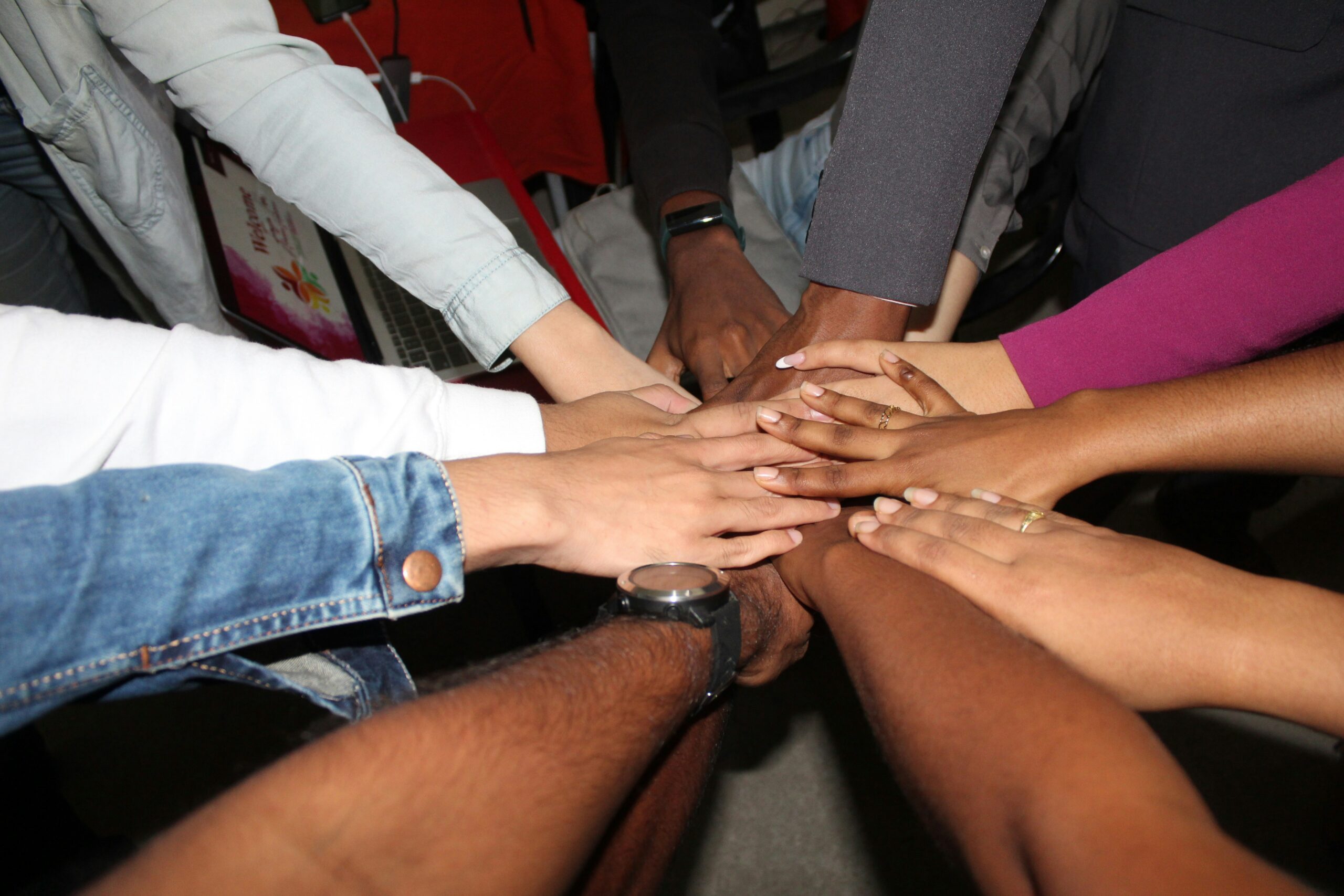
A recent article in the Stanford Social Innovation Review argues that the next essential form of intelligence may not be artificial intelligence (AI), emotional intelligence (EQ), or even cognitive intelligence (IQ), but Relational intelligence (RQ): our ability to build trust, foster belonging, navigate challenges together, and create meaning through relationships.
At Resources for Resilience, this idea feels deeply familiar.
The next frontier of human intelligence is anything but artificial. This intelligence is not measured by the power to compute, but the capacity to care. It’s about creating meaning together.
Resilience Happens in Relationship
For years, we’ve taught that resilience is not simply an individual trait. We are not meant to weather adversity alone.
Research consistently shows that supportive relationships are among the strongest protective factors for mental and physical well-being. When we feel seen, heard, and connected, our nervous systems are better able to regulate stress. We recover more effectively from adversity. We become more capable of supporting others.
The SSIR article describes relational intelligence as the capacity to build trust, repair ruptures, and care for one another. In many ways, these are the same skills that strengthen resilience. They help us move from isolation to belonging, from overwhelm to regulation, and from disconnection to community.
“The future of learning, work, health, and democracy will depend less on how smart our machines become and more on how well we design our lives and institutions to strengthen human relationships.”
The Cost of Disconnection
The article points to an alarming reality: despite being more digitally connected than ever, many people are feeling increasingly alone.
Loneliness has become a public health concern. Young people report fewer close friendships. Adults are spending more time online and less time engaging face-to-face. Many of us are overwhelmed by chronic stress, uncertainty, and social division.
Here in Western NC and in communities across the country, we see these challenges every day. People are carrying the weight of disasters, economic pressures, workplace stress, caregiving demands, and the lingering effects of collective trauma.
When stress goes unaddressed, it can narrow our capacity to connect. We become more reactive, more isolated, and less able to access the relationships that help us thrive.
This is why resilience-building skills matter.
“Our brains are fundamentally wired for connection; our need to belong is as basic as our need for food or water.”
Isabelle Hau
Regulation Creates Connection
One of our core teachings is that when our nervous system is overwhelmed, connection can feel difficult.
We may become stuck in survival responses, feeling disconnected from ourselves and others. But when we learn practical wellness skills and tools, we can bring the nervous system back into balance.
Why does this matter for relationships?
Because regulated nervous systems create the conditions for curiosity, empathy, patience, and compassion. They help us listen more deeply. They make it easier to stay present during difficult conversations. They allow us to support others without becoming overwhelmed ourselves.
In other words, resilience skills help strengthen our relational intelligence.
There’s so much opportunity for individuals, teams, and organizations who know how to bring others together and make them feel part of something larger. If you’re building community and creating a sense of belonging you’re in luck because this is increasingly where people will be willing to spend their time and money.
The ‘Oxytocin Economy’
The “oxytocin economy” is an antidote to “dopamine culture.” This emerging concept that suggests the most valuable currency in the future may not be information, productivity, or attention, but belonging, connection, and human relationships.
The idea builds on the role of oxytocin, a hormone and neurotransmitter often called the “bonding hormone” or “connection chemical.” Oxytocin is released during positive social interactions and experiences that inspire feelings of trust and safety, acts of kindness, physical touch, meaningful conversations, and cooperation.
Many futurists believe that the skills and experiences that foster genuine human connection will become even more valuable because they cannot be fully automated.
In this framework, the most successful leaders, teams, and organizations are those that create environments where people feel:
- Seen
- Heard
- Valued
- Safe
- Connected
When people experience these emotions, they are more capable of:
- Trusting and collaborating with others
- Sharing resources and support
- Problem-solving creatively
- Building resilient communities
With every workshop, training, and event, Resources For Resilience is building the foundations of an oxytocin-rich culture.
The future belongs to those who can build trust, foster belonging, and strengthen human connection. In an increasingly digital world, relationships may become our most valuable form of infrastructure.
The next economy is built on belonging. People are craving places where they have a real reason to come back. Places where they’re recognized, where they look forward to seeing others, and where someone notices when they don’t show up.
Building Relational Infrastructure
One of the most powerful ideas from the SSIR article is the concept of relational infrastructure: the intentional design of systems and environments that make human connection easier.
Relational infrastructure can look like:
- Schools where students have trusted adults who know and support them
- Workplaces that prioritize psychological safety and belonging
- Healthcare settings where providers have time to truly connect with patients
- Neighborhoods that create opportunities for people to gather and support one another
- Community organizations that bring people together in meaningful ways
This is where Resources For Resilience seeks to contribute.
Every training, workshop, and partnership we facilitate is ultimately about strengthening the human connections that allow communities to thrive. Whether we’re working with first responders, healthcare professionals, educators, veterans, faith communities, or disaster-impacted residents, we’re helping build the relational capacity that supports long-term resilience.
The resilience skills we teach are not just tools for individual well-being. They are tools that strengthen teams, improve relationships, and foster healthier organizational cultures. When people feel more regulated and connected, they are better able to care for others and sustain their work over time. This is relational resilience in action.
Prediction: The future of almost every industry lies in connection. As nearly everything in society becomes monetized and commodified, real life will become the ‘premium product’ people crave.
A Relational Renaissance
Technology will continue to evolve. But our greatest strength as humans has never been our ability to automate, compute, or optimize. It has been our ability to connect, collaborate, and care.
Alongside the rise of AI, we can create a “relational renaissance” that prioritizes human connection, belonging, and care.
At Resources For Resilience, we believe that future begins with small, everyday acts of connection.
It begins with simple acts of showing up for one another, when …
- a teacher makes a student feel seen.
- a healthcare worker pauses to listen.
- neighbors check in on one another after a disaster.
- colleagues create space for honest conversation.
- communities invest in relationships as intentionally as they invest in infrastructure.
NEXT STEPS